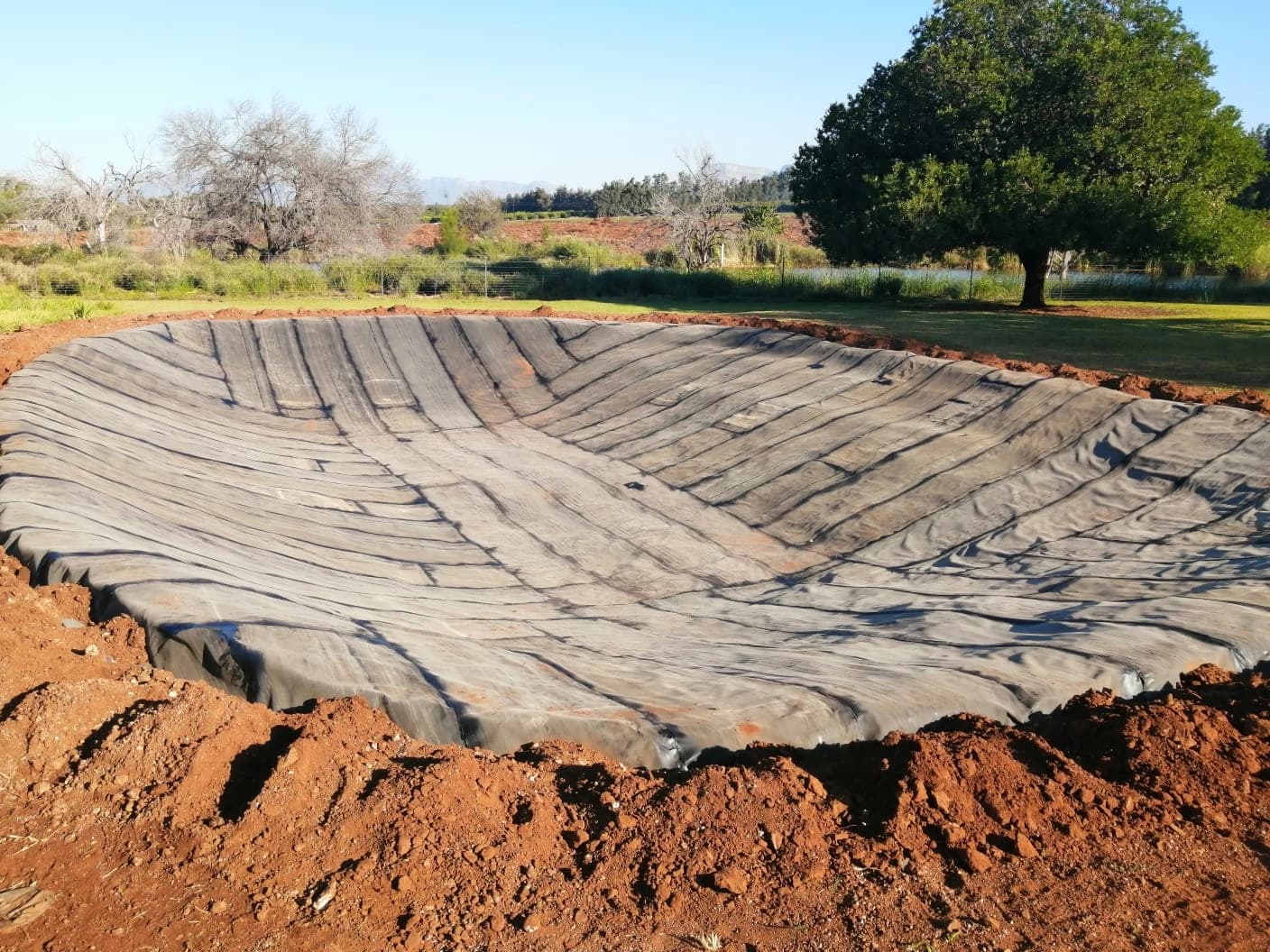
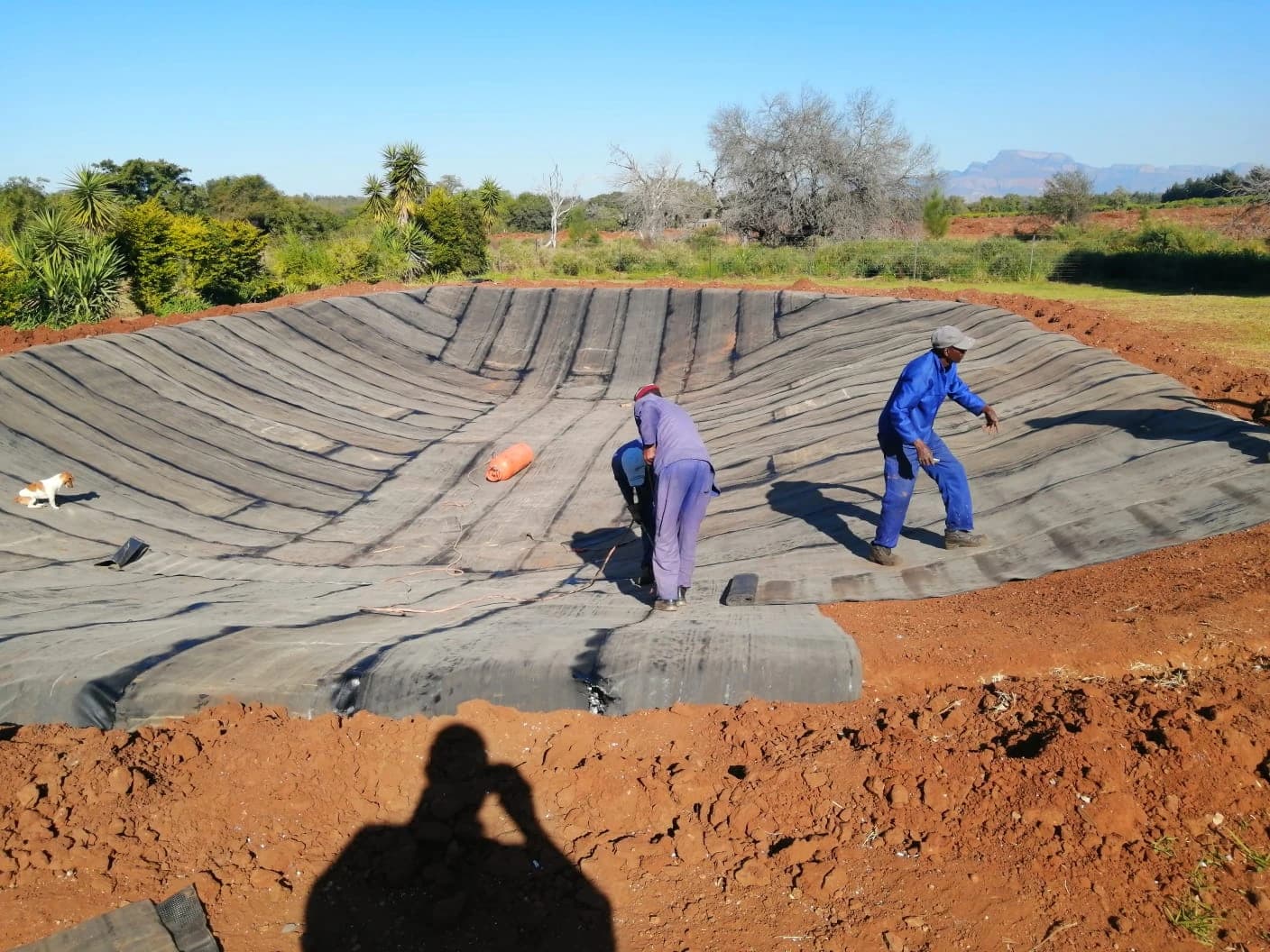
550 m² bitumen torch-on lining for cement / structured dam waterproofing.
PROJECT DETAIL
Overview
A Hoedspruit-area client needed to waterproof a rigid dam structure in the Lowveld heat — a common requirement on older cement or gunite farm and commercial dams where flexible HDPE profile lining is not the right fit for the prepared surface. Reliable retention supports agricultural and operational water use through long dry spells typical of the Olifants valley climate.
PROJECT DETAIL
Site Conditions
Hoedspruit experiences high summer temperatures and strong UV, which stress exposed waterproofing if surfaces are not prepared and detailed correctly. The dam's rigid cement or gunite walls and floor required adhesion-focused membrane work rather than loose-laid geomembrane.
Requirement
Torch-on application over the 550 m² dam surface demanded controlled overlap, corner detailing and penetration seals that stay watertight under thermal movement. Surface preparation — clean, dry and primed — determines whether the membrane bonds or fails within seasons.
Our Approach
Damtech applied modified bitumen torch-on sheets in runs planned to maintain continuous laps across walls and floor transitions. Details at corners, outlets and any penetrations received extra layers where the specification required. Work was staged to manage heat and wind conditions suitable for torch application in the Lowveld.
OUTCOME
Result
550 m² of torch-on bitumen lining was completed, improving water retention on the structured dam for agricultural and operational use in a low-rainfall district.
550 m² bitumen torch-on membrane installed on rigid dam surfaces.
Continuous waterproofing layer suited to Hoedspruit heat and dry seasons.
Detail work at corners and penetrations completed to torch-on practice.
Improved retention for stored water used in farm and operational schedules.
PROJECT GALLERY
On-Site Installation
Bitumen torch-on waterproofing photos from Damtech's 550 m² Hoedspruit dam lining project in Limpopo.
EXPLORE SERVICES
Related Services
Dam linings, waterproofing and water storage services related to this project.