HDPE
High tensile strength, UV resistance and puncture resistance — ideal for large farm and mining dams.
Learn moreHDPE · PVC · Bitumen
Damtech supplies and installs HDPE, PVC and torch-on dam liners for earth dams, reservoirs, ponds and water storage applications across South Africa.
*Typical service life varies by material specification, UV exposure, subgrade preparation, installation quality, water chemistry and mechanical damage. Damtech confirms the relevant supplier specifications for each quoted system.
DAM LINERS & DAM LININGS
Damtech supplies and installs dam linings for earth dams, reservoirs and water storage across South Africa. Correctly specified systems help reduce seepage and protect stored water for farms, mines, game lodges and commercial properties.
| Lining type | Sizes | Best for | Typical service life |
|---|---|---|---|
| HDPE | 1 mm, 1.5 mm and 2 mm | Earth dams, mining ponds, irrigation storage | Typically 20–30 years* |
| Bitumen Torch-On | 3 mm and 4 mm | Cement dams, canals, rigid reservoirs | Typically 15–20 years* |
| PVC | 550–850 gsm | Steel tanks, ponds, small reservoirs | Typically 10–15 years* |
MATERIAL OPTIONS
HDPE, PVC and bitumen torch-on dam linings for farms, mines, game lodges and commercial water storage.
High tensile strength, UV resistance and puncture resistance — ideal for large farm and mining dams.
Learn moreHeat-bonded membrane with strong adhesion to prepared cement and rigid dam surfaces.
Learn moreFlexible dam lining for ponds, steel tanks and smaller reservoirs where ease of handling matters.
Learn moreWHY DAMTECH
Practical dam lining installation with supplier-backed materials and clear communication from quote to handover.
Installation by experienced personnel using project-appropriate welding, anchoring and inspection procedures
Top-quality materials from leading local suppliers
Custom solutions tailored to your requirements
Dedicated support from consultation to completion
Competitive pricing with high-value outcomes
Supplier-backed material warranty where applicable
Share photos, approximate dimensions and how you use stored water — we will recommend HDPE, PVC or bitumen torch-on.
MORE DETAIL
Rainfall in much of the country is seasonal and unpredictable. Farmers buffer dry months by storing runoff and borehole water in farm dams, but an unlined dam can lose 30% or more of its volume to seepage depending on soil type. In Limpopo, Mpumalanga and the Western Cape, clients routinely combine HDPE-lined earth dams with corrugated steel tanks so irrigation and stock water continue through droughts and load-shedding.
Dam linings also contain water that might otherwise pick up salts, iron or sediment from the dam floor — important where water is pumped to pivots, drip lines or drinking troughs. For mining and industrial sites, geomembrane lining helps meet containment expectations and reduces the risk of uncontrolled seepage into surrounding land.
MORE DETAIL
HDPE geomembrane is our first choice for large farm and mining dams where UV exposure, puncture resistance and long service life matter. PVC suits smaller ponds, cement reservoirs and steel tanks where flexibility and cost per square metre are priorities. Bitumen torch-on works well on prepared cement or gunite surfaces where a heat-welded bond to the substrate is required.
Thickness, seam design and anchor trench detail depend on dam depth, slope angle and whether livestock will access the water. We measure your dam, review soil conditions and recommend a lining spec before quoting — not a one-size-fits-all roll-off-the-truck approach.
MORE DETAIL
Dam lining cost depends on project-specific factors rather than a single square-metre rate. The main drivers are lined surface area, liner thickness and material type, site access for plant and crew, surface preparation (rock removal, grading and compaction), and anchor trenching at the crest and around penetrations.
Remote sites, steep batters, rocky subgrades or complex outlet detailing increase labour and preparation time. Share approximate dimensions and photos for a free quote so we can price the work for your dam — not a generic catalogue figure.
MORE DETAIL
Every project starts with a site visit or detailed drawings: dam capacity, freeboard, inlet/outlet positions and access for equipment. We prepare the subgrade — removing rock, grading batters and compacting where needed — then deploy liner panels with factory-quality welds and tested seams.
Anchoring at the crest, around pipes and at the toe is completed to manufacturer standards. Where required we install geotextile underlay for puncture protection on rocky or stony ground. After installation we flood-test or inspect before handover, and we explain simple maintenance checks you can do after seasonal rains.
MORE DETAIL
Agricultural clients use our dam linings on irrigation dams, cattle and game drinking dams, and balancing ponds for borehole systems. Mining and industrial sites specify HDPE for process water, runoff control and tailings-related containment. Estates, lodges and commercial nurseries line ornamental ponds and storage dams where leaks would damage landscaping or neighbouring properties.
We also reline existing dams where an older PVC or bitumen membrane has reached end of life, and patch or extend linings after earthworks or dam wall upgrades.
MORE DETAIL
Rising damp on the downstream face of a dam wall, unexplained water-level drops, or visible liner damage at the waterline are signs action is needed. Small punctures can often be welded or patched if caught early; widespread UV embrittlement or seam failure usually means a planned reline.
If you are expanding dam capacity or reshaping batters, it is often more economical to install new lining sections during that earthworks phase than to patch repeatedly. Our team can assess whether repair or full replacement is the practical route.
HOW IT WORKS
From your first enquiry to final handover, Damtech keeps the process clear, practical and hassle-free.
Tell us what you need, including dam linings, waterproofing, steel water tanks, maintenance or repair.
No obligation. No pressure.
We assess the application, site conditions and practical requirements for your project.
Thorough. Practical. Honest.
We recommend a suitable material, system and installation approach for your site.
Clear recommendations.
Our team delivers the agreed service with clear communication and practical workmanship.
On time. On standard.
OUR PROJECTS
Quality materials, expert installation and practical solutions for dam linings, waterproofing and water storage.
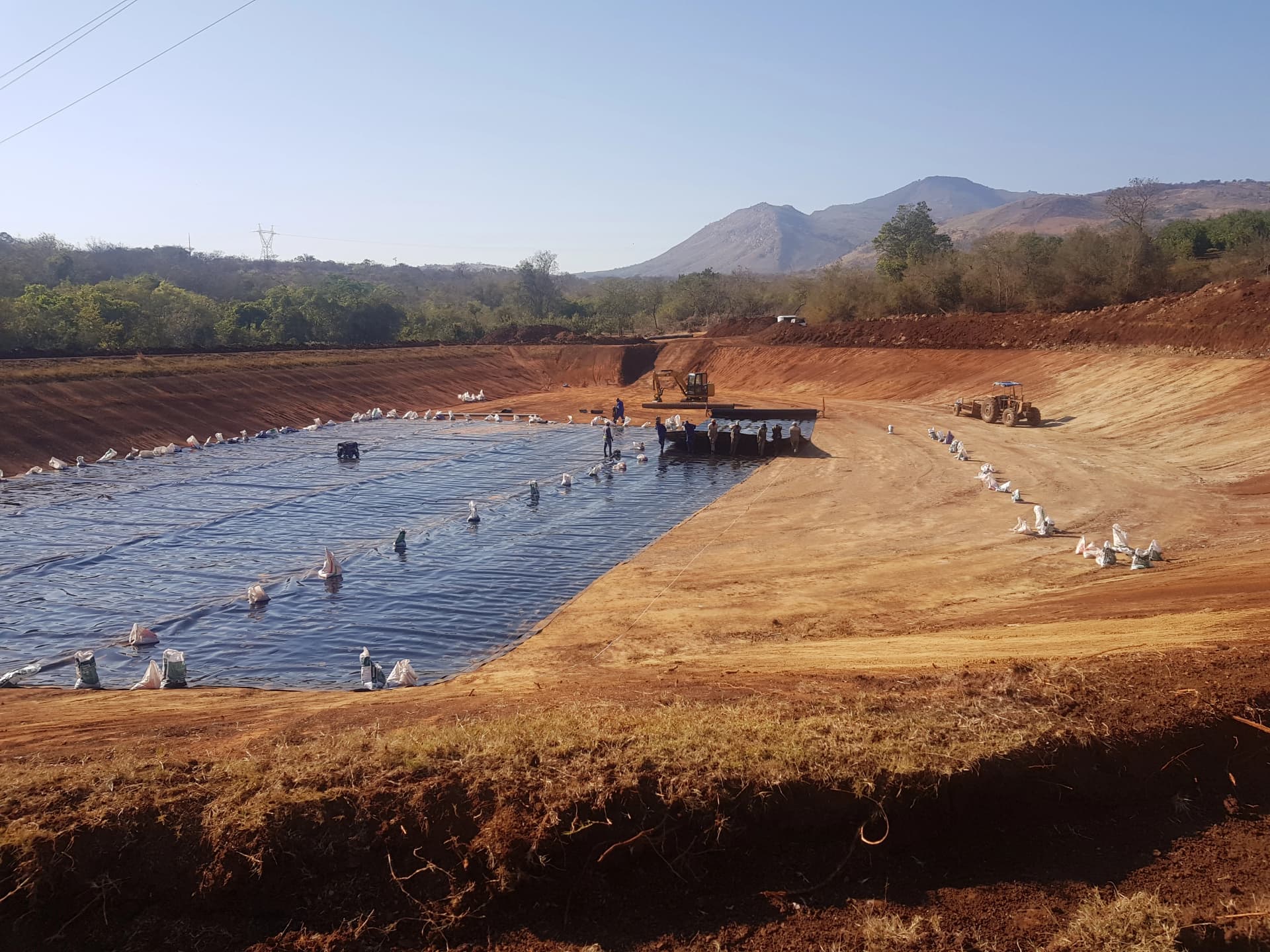
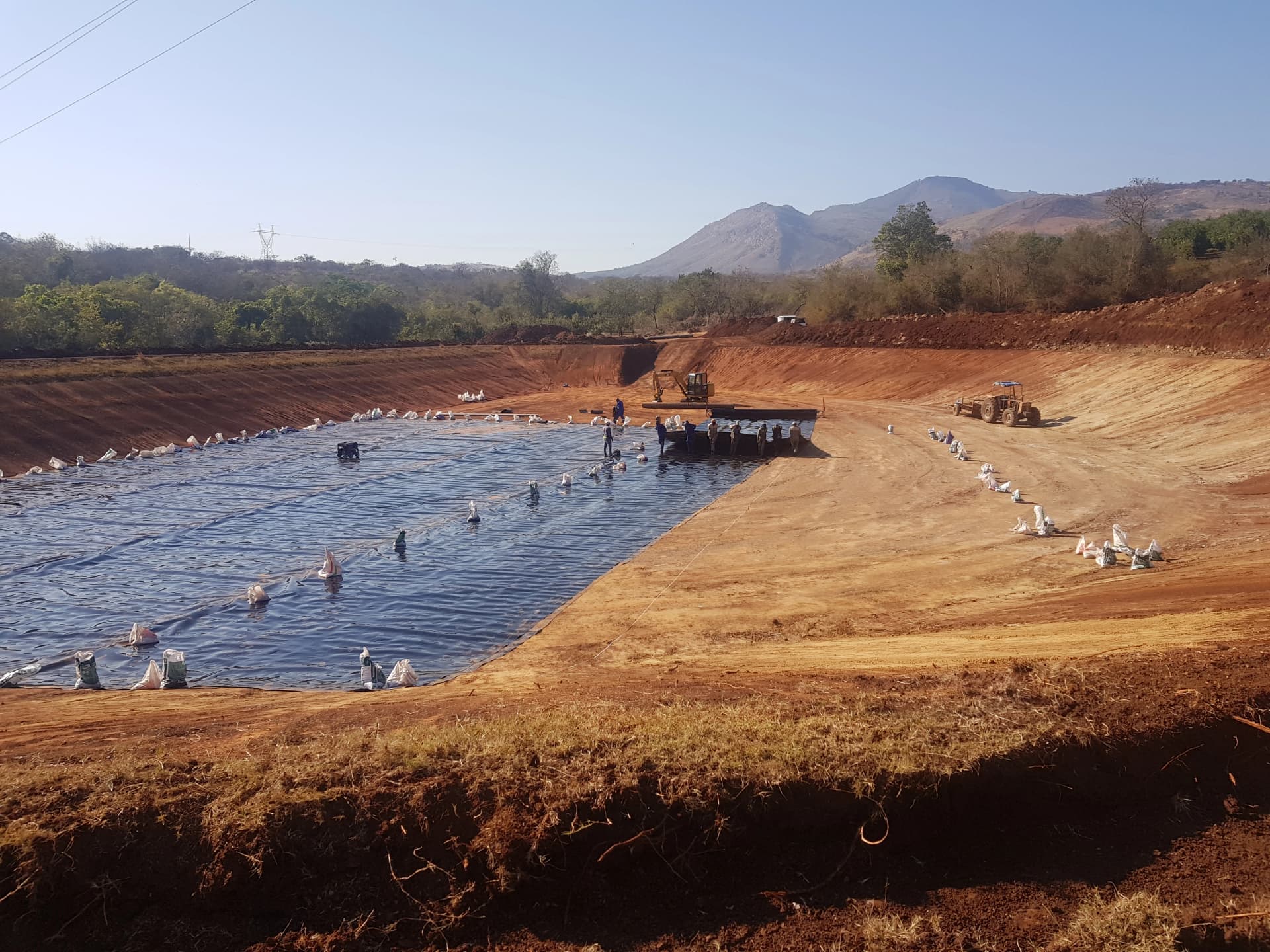
Three dams · 2,098 m² total
Three earth dams at a North West game lodge were lined with 1 mm HDPE geomembrane, covering a combined area of 2,098 m².
View project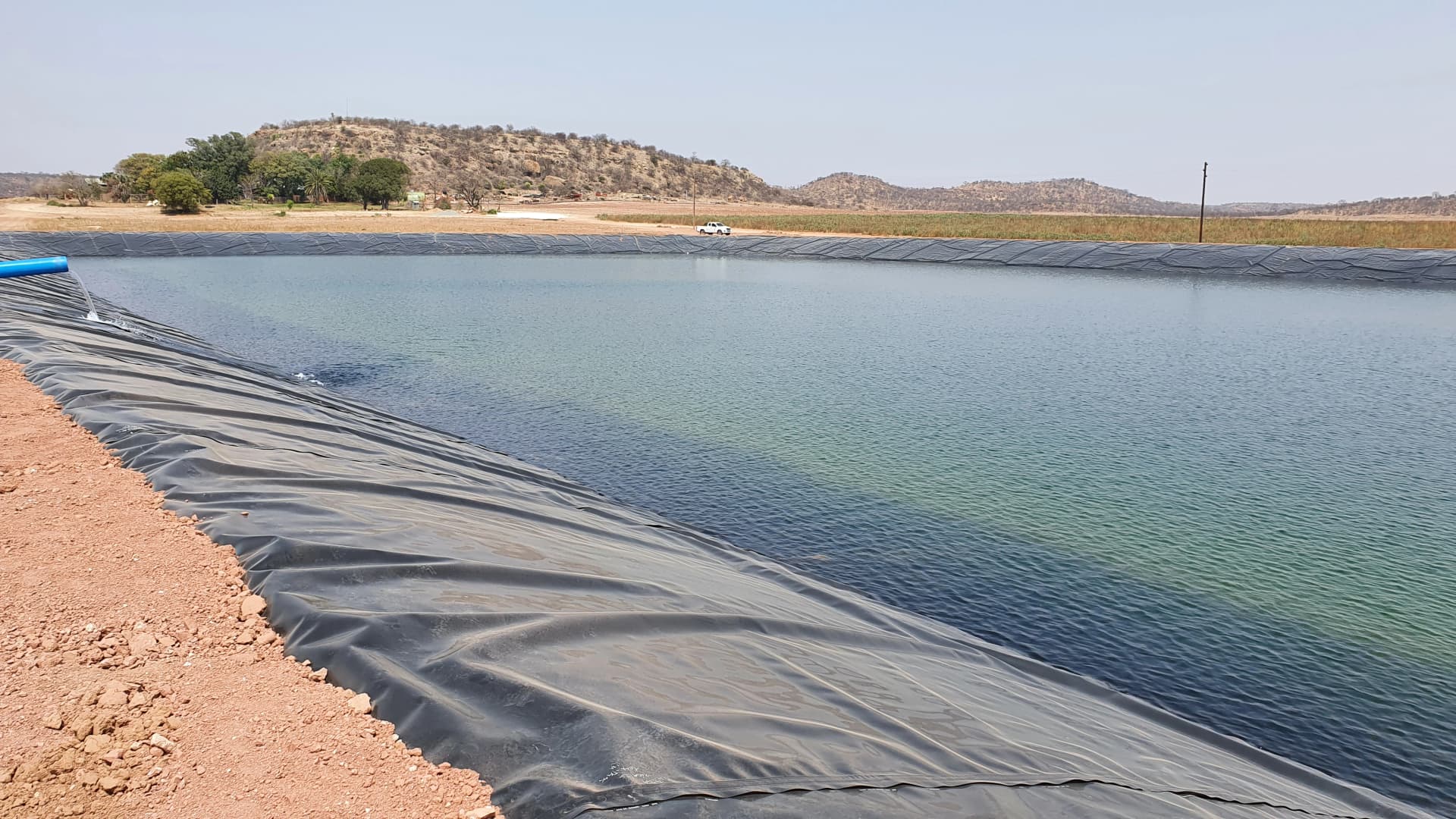
13,360 m² HDPE dam liner supply and installation for farm water storage.
Large-scale HDPE earth dam lining in the Stellenbosch wine and agricultural district — 13,360 m² installed for reliable farm water storage.
View project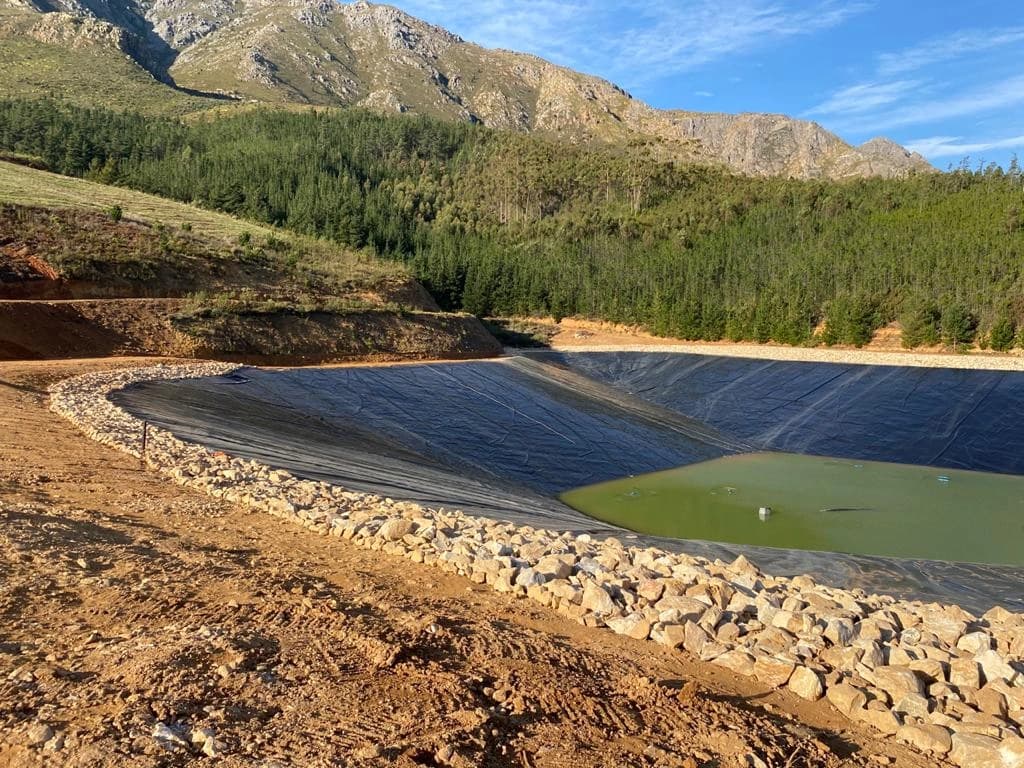
3,400 m² HDPE liner installation for agricultural water storage.
Grabouw farm dam lined with 3,400 m² HDPE to protect irrigation reserves in the Western Cape fruit belt.
View project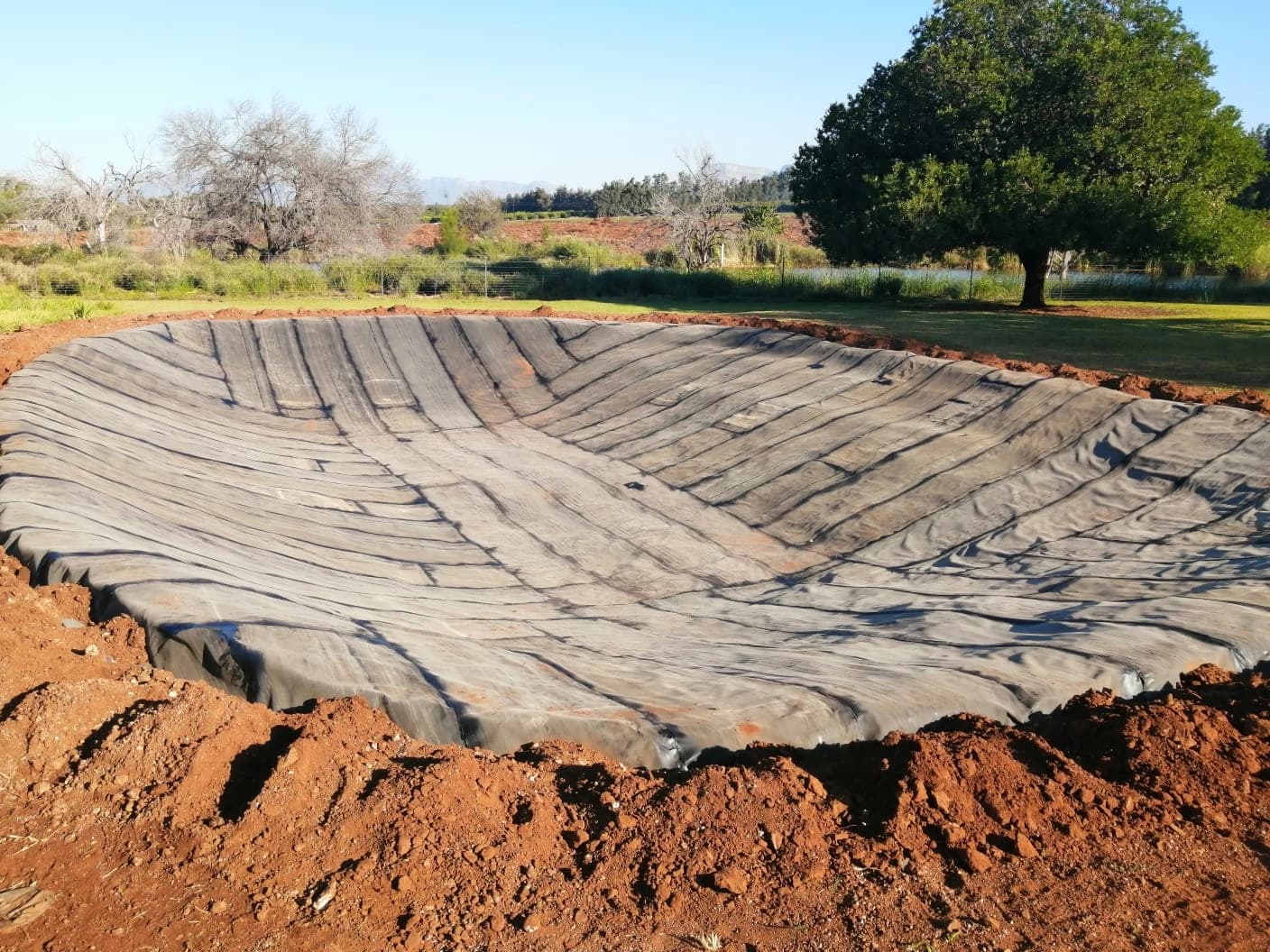
550 m² bitumen torch-on lining for cement / structured dam waterproofing.
Hoedspruit structured dam waterproofed with 550 m² bitumen torch-on lining for Lowveld water storage.
View project
1,200 m² HDPE dam liner for farm water storage in the Centurion / Pretoria corridor.
Centurion farm dam lined with 1,200 m² HDPE to protect irrigation water in Gauteng.
View project
Torch-on bitumen waterproofing for a round concrete dam with an 18 m diameter. Approximately 255 m² circular base footprint, calculated from the 18 m diameter. This is a geometric base-area estimate — not the measured installed membrane quantity. Installed membrane area is higher once walls are included — roughly +50 m² for a 2.3 m high wall all around, plus overlaps, detailing and waste.
Tzaneen round concrete dam waterproofed with torch-on bitumen — 18 m diameter, approximately 255 m² base footprint.
View projectFAQ
With correct installation, UV-stable HDPE typically performs 20–30 years on farm dams. Lifespan depends on exposure, water chemistry, maintenance and whether livestock or machinery contact the liner. Supplier-backed material warranty may apply on qualifying materials, subject to supplier terms.
Yes, in most cases. We lower the water level, prepare exposed surfaces and install liner panels to fit the current profile. Very steep or unstable walls may need minor reshaping first. Contact us with photos and approximate dimensions for an initial assessment.
HDPE is stiffer, more puncture-resistant and better suited to large earth dams and mining applications. PVC is more flexible and often used in steel tanks, small ponds and cement reservoirs. We recommend based on dam size, soil and how the water will be used.
Yes. Damtech works nationally on agricultural, mining and commercial projects. Travel and mobilisation are factored into quotes for sites in Limpopo, Mpumalanga, the Western Cape and other provinces.
Many clients store high-quality borehole water in a lined steel tank for household or irrigation use while keeping a larger earth dam for stock or runoff. We supply and line both — see our steel water tanks page for reservoir sizes.
EXPLORE SERVICES
EXPLORE SERVICES
READY TO GET STARTED?
Call us on +27 82 853 1026 or submit our quote form with dam dimensions and photos for a tailored dam lining recommendation.