Torch-On Membranes
Heated and applied directly to the primed surface using a torch, creating a strong seamless bond — the standard for flat concrete roofs and many reservoir repairs in South Africa.
Roofs · Foundations · Reservoirs
Damtech offers bitumen torch-on waterproofing, leak prevention and maintenance waterproofing services for water-retaining structures and commercial properties across South Africa.
WATERPROOFING SERVICES
Damtech provides practical waterproofing for concrete dams, reservoirs, channels, roofs and water-retaining structures. Our systems help reduce leaks, protect surfaces and extend infrastructure life.
WHERE IT WORKS
Bitumen waterproofing for roofs, foundations, retaining structures and water-retaining applications.
Roofs (cement slabs and metal roofs)
Foundations and basements
Retaining walls
Ponds and reservoirs
Agricultural packhouses and stores
Parapets, flashings and roof outlets
| System | Application | Best for |
|---|---|---|
| Torch-on membrane | Heat-welded sheets on primed surfaces | Flat roofs, reservoirs, large areas |
| Self-adhesive membrane | Peel-and-stick without open flame | Confined sites, parapets, detail zones |
| Liquid bitumen coating | Brush or roller applied | Corners, pipes, irregular shapes |
SYSTEM OPTIONS
Torch-on, self-adhesive and liquid bitumen systems for leak prevention and long-term waterproofing.
Heated and applied directly to the primed surface using a torch, creating a strong seamless bond — the standard for flat concrete roofs and many reservoir repairs in South Africa.
Pre-applied adhesive backing for faster installation without open flame — useful on confined sites, parapet details and areas where hot work is restricted.
Liquid coatings applied with brushes or rollers for corners, pipe penetrations and irregular surfaces before wider membrane sheets are laid.
MORE DETAIL
Damtech installs bitumen waterproofing for agricultural buildings, packhouses, commercial stores and water-retaining structures across South Africa. Property managers and farm owners typically call us when roofs, foundations or reservoir walls start showing damp, blistering membranes or active leaks after summer storms.
We assess the substrate first, then recommend torch-on, self-adhesive or liquid systems that match access constraints, fire-safety rules on site and the remaining life of the structure — so waterproofing work fits around harvest, production or tenant schedules.
MORE DETAIL
We apply torch-on, self-adhesive and liquid bitumen systems on flat concrete slab roofs, metal roof laps and flashings, basement and foundation walls, retaining walls, and water-retaining structures including reservoirs and canals. On farms and commercial sites, common jobs include leaking store roofs, damp rising through foundation walls, and reservoir repairs where a flexible membrane outperforms rigid coatings.
MORE DETAIL
Modified bitumen sheets are designed to flex with structural movement and resist ponding water on flat roofs. Torch-on installation melts the underside of the membrane so it bonds to the primed substrate — critical on concrete where adhesion failures cause the blisters and peeling many property owners describe. Self-adhesive variants suit confined areas where open flame is restricted.
Liquid bitumen coatings help for detailing around pipes, corners and irregular surfaces before wider membrane runs are laid. In high-UV zones we recommend protected membranes or appropriate surface finishes where the system will be exposed long term.
MORE DETAIL
Not every roof or wall needs a full strip-and-replace. We inspect first — checking for failed laps, blocked outlets, cracked parapets and trapped moisture under old paint — then propose repair or overlay options that match the budget and remaining life of the structure. Preventative maintenance programmes include scheduled inspections and spot repairs before minor leaks become structural damage or stock losses.
For agricultural and industrial clients, fixing a leaking roof before maize season or production ramps up avoids downtime and protects equipment stored underneath.
MORE DETAIL
Acrylic roof paints can work as a reflective top coat on sound substrates but rarely fix active leaks on their own. Bubbles and flaking usually mean moisture is moving beneath the coating. Bitumen membranes address the waterproofing layer itself; they are not a cosmetic cover-up. Our technicians are trained in surface preparation, primer selection and lap widths — steps that determine whether a system lasts five years or twenty.
WHY DAMTECH
Free site inspection
Supplier-backed materials from leading local suppliers
Expert advice at no cost
Certified installation technicians
Premium bitumen materials
Competitive, transparent pricing
We assess leaks, failed paint systems and membrane condition before quoting repair or overlay work.
HOW IT WORKS
From your first enquiry to final handover, Damtech keeps the process clear, practical and hassle-free.
Tell us what you need, including dam linings, waterproofing, steel water tanks, maintenance or repair.
No obligation. No pressure.
We assess the application, site conditions and practical requirements for your project.
Thorough. Practical. Honest.
We recommend a suitable material, system and installation approach for your site.
Clear recommendations.
Our team delivers the agreed service with clear communication and practical workmanship.
On time. On standard.
OUR PROJECTS
Quality materials, expert installation and practical solutions for dam linings, waterproofing and water storage.
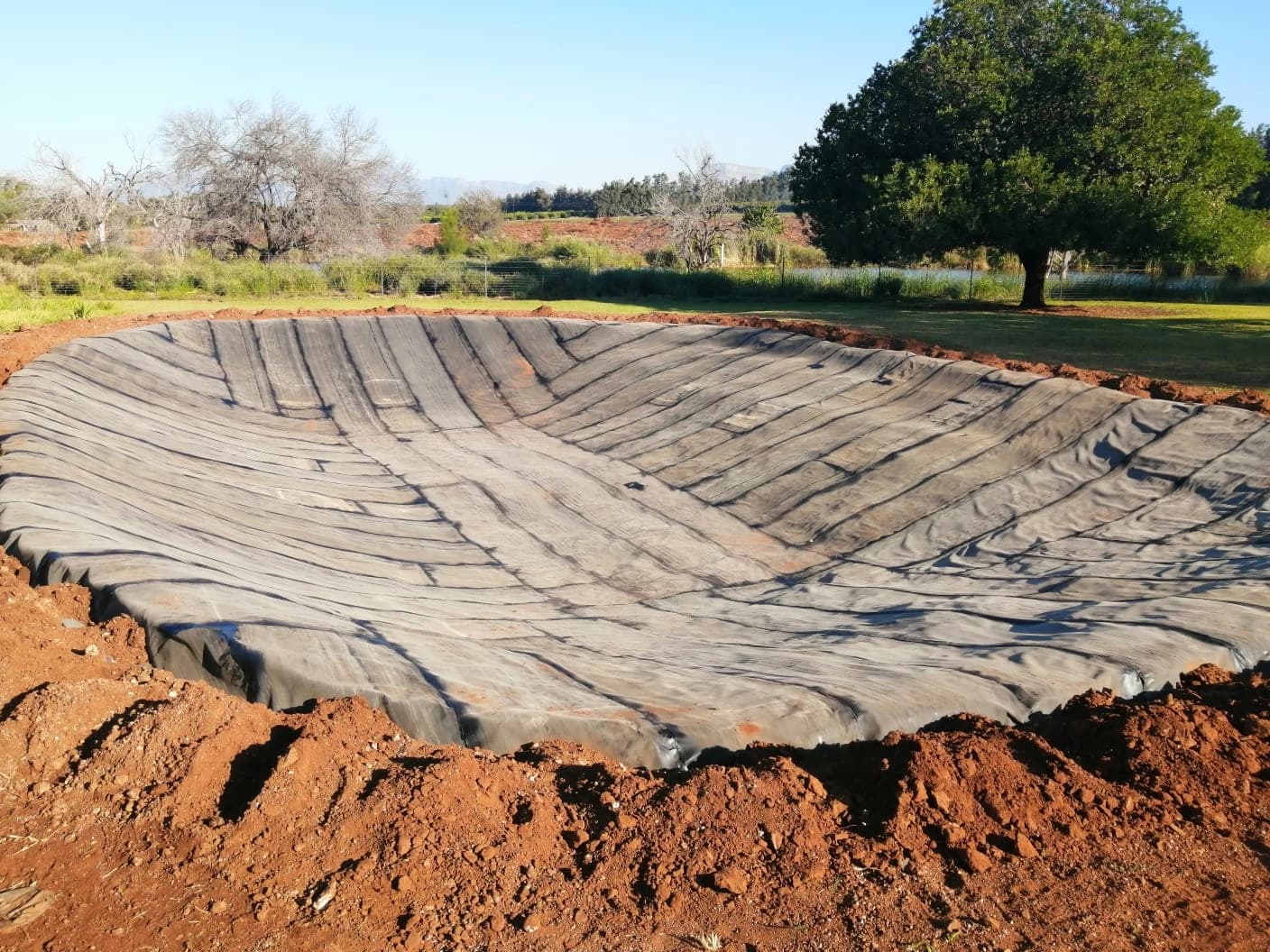
550 m² bitumen torch-on lining for cement / structured dam waterproofing.
Hoedspruit structured dam waterproofed with 550 m² bitumen torch-on lining for Lowveld water storage.
View project
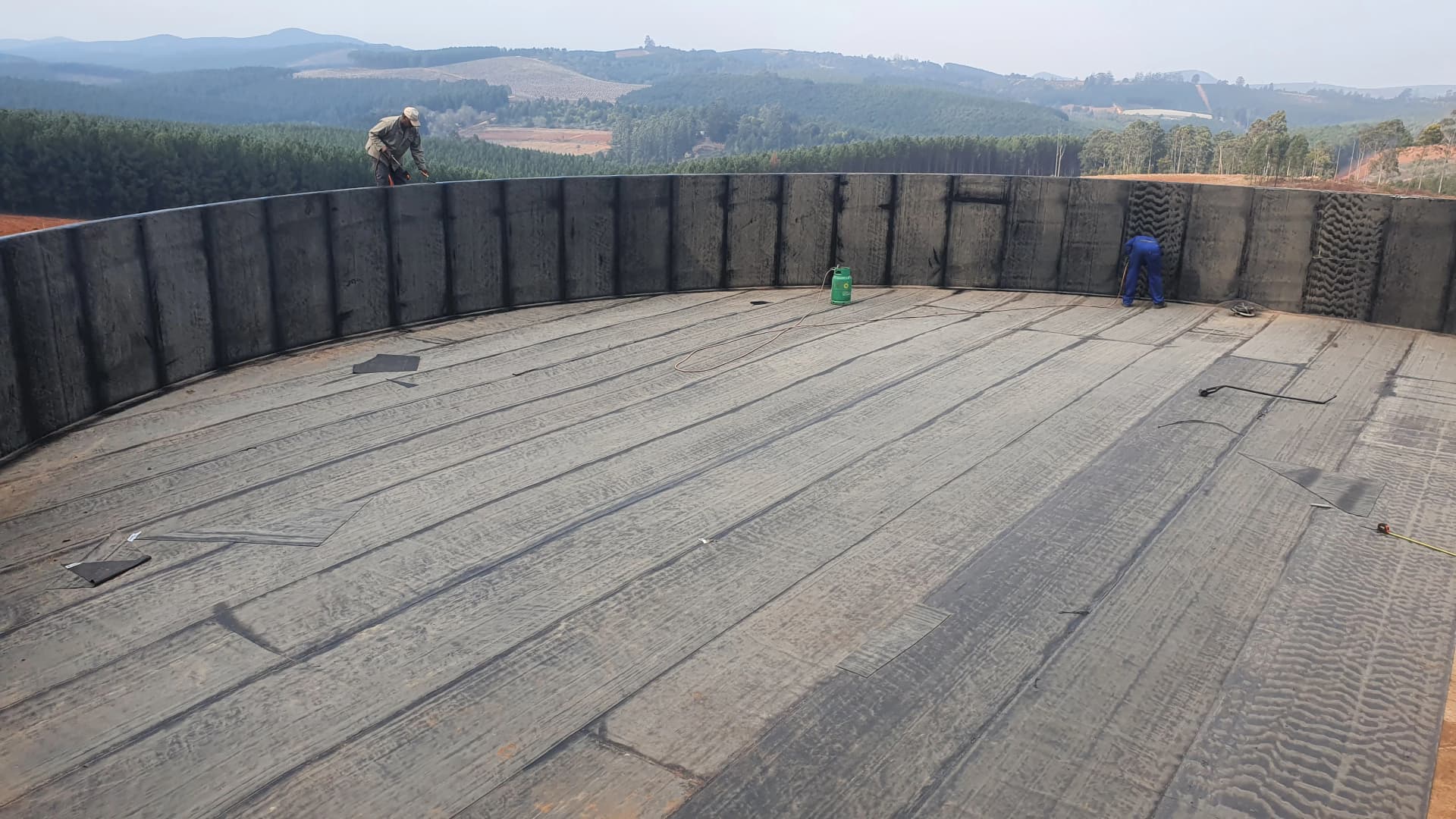
Torch-on bitumen waterproofing for a round concrete dam with an 18 m diameter. Approximately 255 m² circular base footprint, calculated from the 18 m diameter. This is a geometric base-area estimate — not the measured installed membrane quantity. Installed membrane area is higher once walls are included — roughly +50 m² for a 2.3 m high wall all around, plus overlaps, detailing and waste.
Tzaneen round concrete dam waterproofed with torch-on bitumen — 18 m diameter, approximately 255 m² base footprint.
View project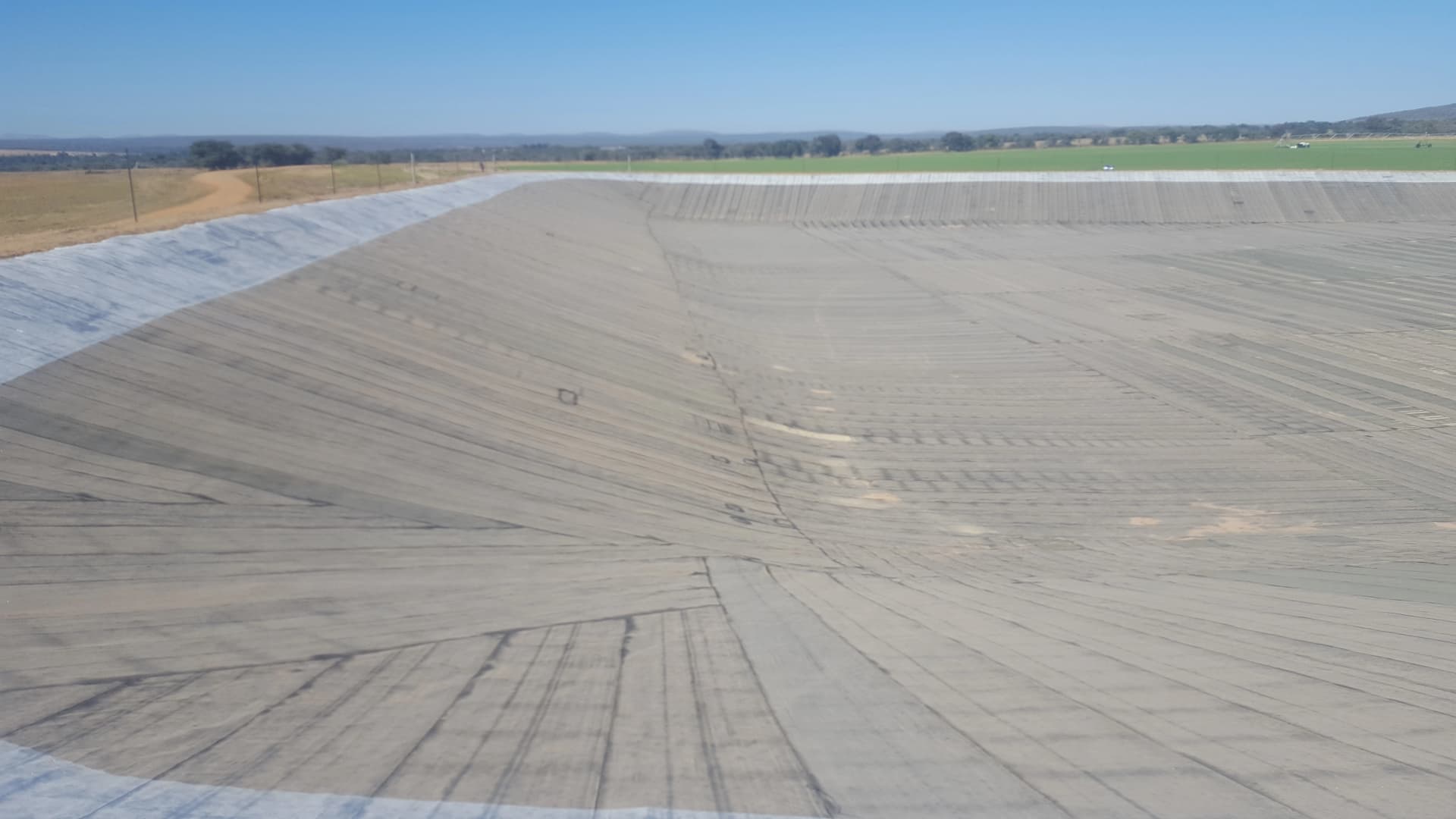
Approximately 15,000 m²
An approximately 15,000 m² bitumen earth dam lining project in Worcester, Western Cape, for large-scale water storage.
View projectFAQ
In many cases yes. We assess the substrate, remove failed sections where needed, and apply torch-on or self-adhesive membranes over prepared concrete or metal. Severely saturated or structurally unsound decks may need partial rebuild before waterproofing.
Torch-on is applied by certified technicians with fire precautions and appropriate permits where required. For grain stores, workshops and livestock shelters we plan access and hot-work safety around your operations.
Quality torch-on systems on well-prepared substrates commonly deliver 15–20 years of service. Exposure, traffic on the roof and maintenance frequency affect actual lifespan. We include material warranty support and can schedule inspections.
Yes. Bitumen torch-on is often used on cement reservoirs and canal linings where a bonded membrane is required. For large earth dams we may recommend HDPE instead — see our dam linings service.
EXPLORE SERVICES
READY TO GET STARTED?
Leaking roof or damp walls? Tell us about the structure and we will recommend a practical bitumen repair or overlay.