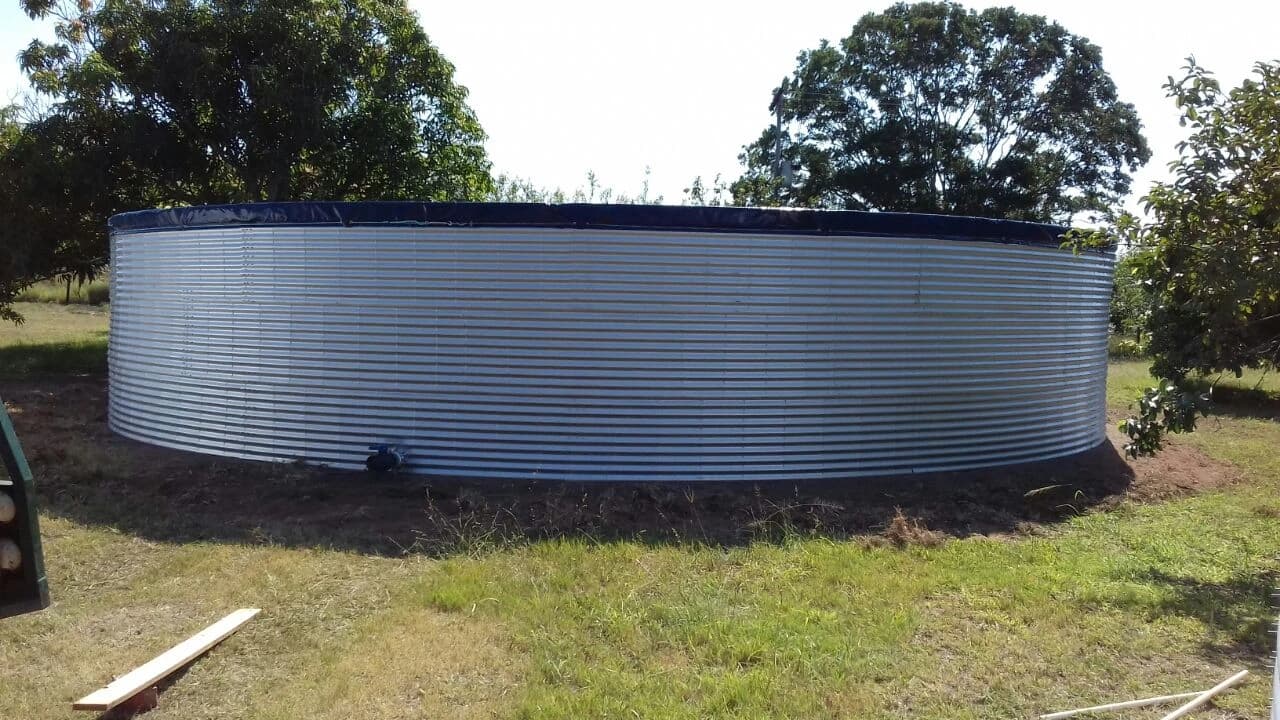
Johannesburg’s water story is defined by demand exceeding local supply, legacy mining landscapes and development pushing agriculture and industry onto the same dolomitic fringe. Properties on the West Rand near Krugersdorp and Randfontein often store process and irrigation water on disturbed ground. On the East Rand, logistics hubs and agribusiness packhouses need tanks and lined ponds where space is measured in metres, not hectares.
The Witwatersrand Highveld shares Pretoria’s summer-rain pattern but urban heat island effects raise evaporation on open dams near Roodepoort and Alberton. Sudden hailstorms can damage unroofed steel tanks if access for maintenance is neglected. Winter is dry; springs that feed minor catchments run low by August, so stored volume carried over from summer storms matters for winter irrigation.
Dolomitic compartments underlie large parts of the West Rand — sinkhole risk and groundwater sensitivity mean some sites cannot use earth dams at all, pushing clients toward steel tanks on engineered pads. Deep sandy soils near the Vaal fringe drain quickly without lining. Mine tailings footprints require geotextile protection and compacted subgrades before any geomembrane is laid; sharp metalliferous gravel must not contact HDPE directly.
Maize and vegetable farms on the city’s outskirts irrigate from dams that must survive municipal throttling. Nurseries and turf farms on the East Rand run tight schedules — a seeping dam mid-season forces expensive borehole hours. Industrial irrigation is less common, but dust suppression on mine stockpiles and construction sites uses stored water on timed sprays that cannot afford pump downtime.
Mining support services, aggregate quarries and coal-related logistics dominate lined containment demand west of Johannesburg. Agribusiness — poultry, piggeries and mixed cropping — lines farm dams and installs steel backup tanks. Commercial estates, schools and warehouses waterproof flat roofs and line fire reservoirs. Game farms on the urban edge share livestock and wildlife watering needs similar to Bushveld properties but on smaller, more regulated footprints.
Stored water buffers Rand Water restrictions, supports dust suppression when boreholes are shared across shifts, and provides fire reserves where municipal pressure is weak at ridge-top developments. Multi-tank steel farms allow phased expansion as yards grow. HDPE-lined process dams help operators manage stormwater and recycle wash water without uncontrolled seepage toward dolomitic aquifers.
HDPE lining for earth and process dams on disturbed ground
Steel tank farms for industrial and agricultural yards
Bitumen torch-on for concrete fire and process reservoirs
Leak repair on ageing corrugated and concrete storage