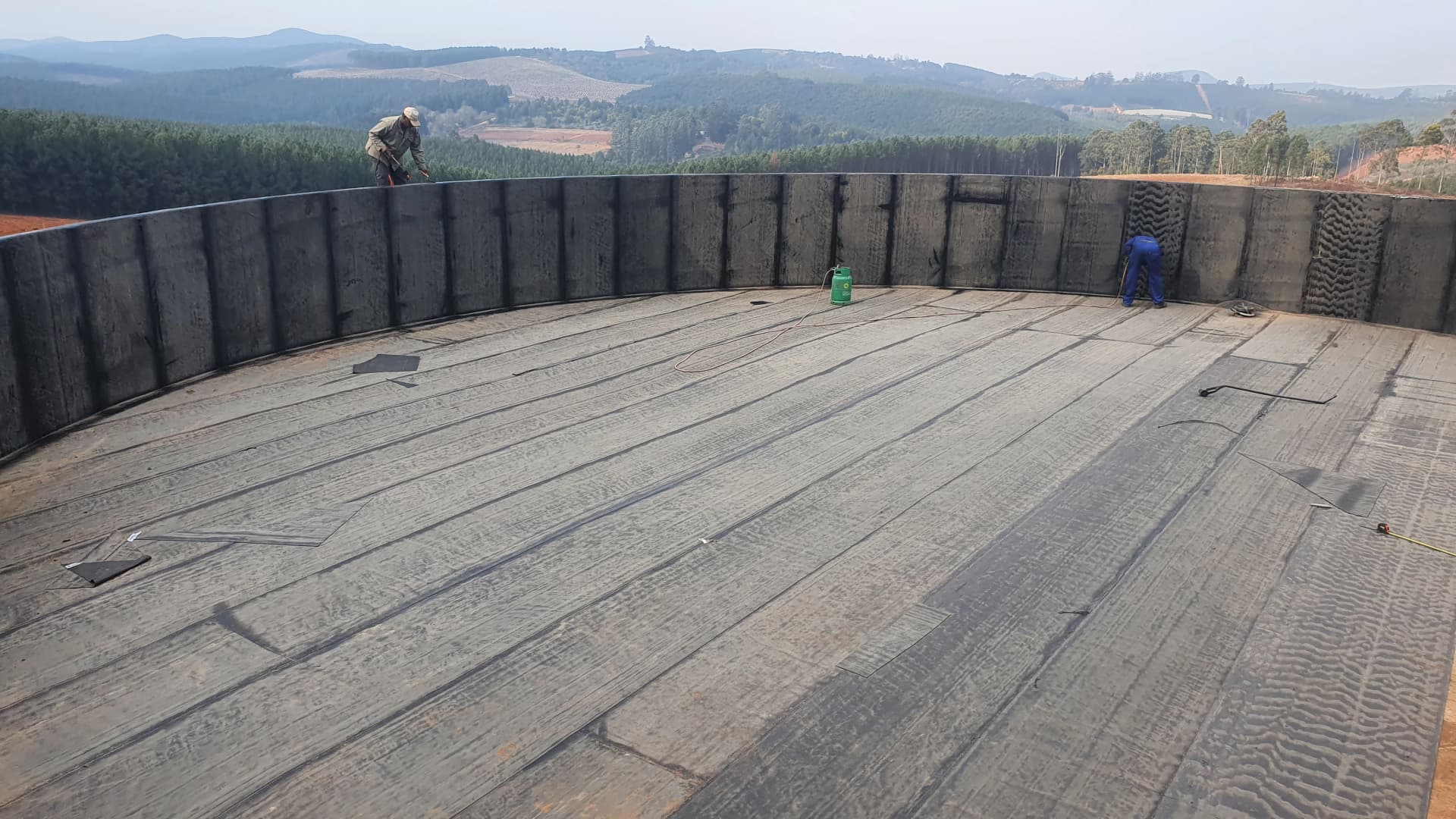
Limpopo stretches from misty Letaba citrus valleys to hot Bushveld game reserves along the Kruger western fence. Rainfall varies sharply: Tzaneen can record generous summer totals while Hoedspruit and the Olifants valley see prolonged dry spells. Farm dams and lodge reservoirs are the backbone of irrigation and wildlife water — unlined basins in sandy granite soils can lose water faster than managers realise until borehole bills spike.
Lowveld districts endure high summer temperatures often above 35 °C, driving evaporation on open dams. Rainfall is strongly seasonal; October to March carries most annual volume, yet multi-week dry gaps mid-season are normal. Frost is rare in the valley but foothill farms above Tzaneen see occasional cold snaps that affect pipe layouts. UV exposure on exposed liner crests is intense — material selection and cover where possible matter on multi-year performance.
Granite sands dominate much of the Bushveld, with low natural cohesion and high permeability without lining. Basalt plains near Phalaborwa and alluvial pockets along the Letaba and Olifants rivers offer different subgrade preparation needs. Game paths along dam toes compact soils but also expose liner edges — anchor design and rock-fill protection zones are routine on lodge projects.
Citrus and mango estates schedule micro-irrigation and sprinkler blocks from farm dams that must hold through September and October before reliable storms return. Avocado and macadamia orchards on slopes above Tzaneen cannot afford seepage on high-value blocks. Cattle posts and community schemes pump from lined dams into trough lines; when levels drop from leakage, herds concentrate at remaining points and accelerate bank erosion.
Fruit export estates, cattle ranching, game tourism and hunting lodges form the core client base. Phalaborwa-area mining and smelter support services require process-water containment adjacent to agricultural land. Emerging irrigation schemes along canal networks line balancing dams to reduce losses before water reaches pivot points.
Lodge operators need reliable wildlife water holes and fire reserves through drought years that suppress tourism grazing. Farmers need every pumped litre from the Crocodile and Olifants catchments retained for packout schedules. Cement dams on older citrus farms often suit bitumen torch-on refurbishment; new earth storage on sandy ranches typically moves to HDPE.
HDPE earth dam lining for farms and lodges
Bitumen torch-on refurbishment of cement dams
Leak repair and crest protection on existing reservoirs
Steel tanks for lodge backup and pump stations