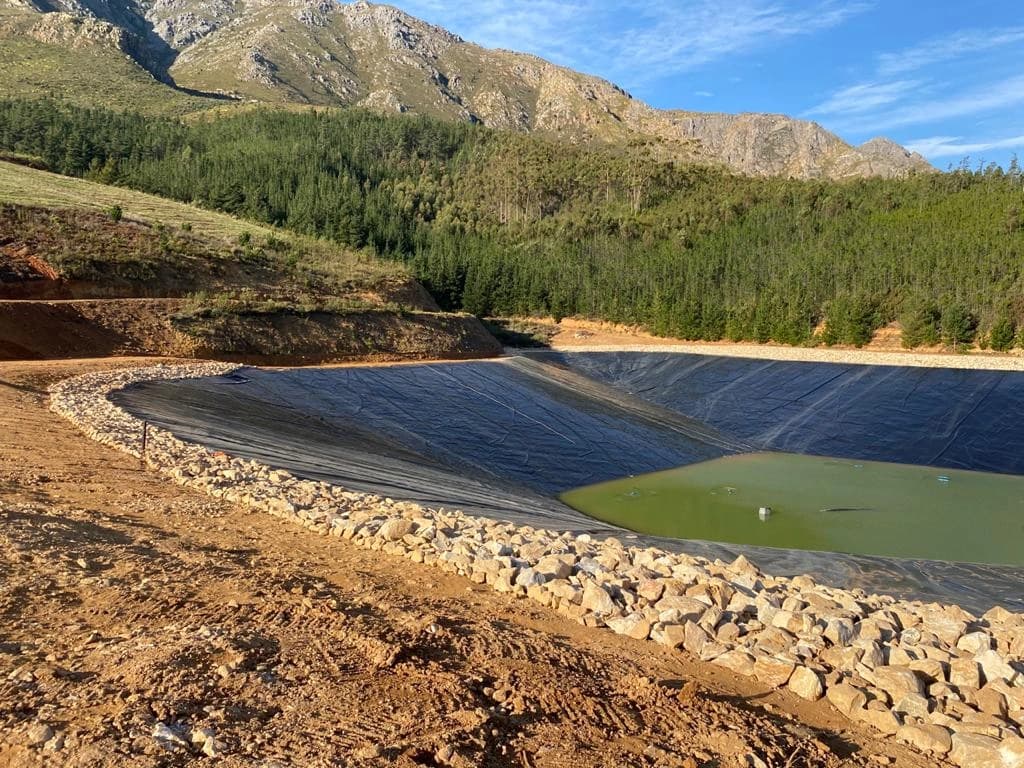
Wine, fruit and livestock farms from the Boland to the Overberg rely on Damtech dam linings to keep scarce summer water in farm dams for irrigation and stock.
Western Cape agriculture operates under some of the country’s tightest water scrutiny. Winter cold fronts fill dams between June and August; summers are dry, windy and unforgiving on open water. Farmers in Stellenbosch, Franschhoek, Grabouw and the Swartland cannot treat seepage as acceptable losses — many dams sit on sandstone-derived soils and weathered granite that drink water year-round without a visible leak on the surface.
LOCAL CONDITIONS
Climate & Seasonal Rainfall
Mediterranean rainfall dominates: wet winters, dry summers. Berg wind events raise evaporation on east-facing dams in the Boland. Snow melt from peaks contributes late-spring flow in some catchments, but licensed abstraction caps mean stored winter volume must last through berry and grape ripening. Climate variability since 2015 has made lining projects a standard capital item rather than a discretionary repair.
SITE FACTORS
Soils & Ground Conditions
Table Mountain Group sandstones and granite saprolite produce shallow, stony profiles on slopes — dam basins often need benching and geotextile before HDPE. Alluvial floors in valleys offer better natural sealing but still benefit from lining when irrigation security is critical. Wind-blown sand accumulates in dam corners; maintenance access after installation helps keep outlets clear.
WATER USE
Irrigation & On-Farm Water Use
Vineyards use deficit irrigation schedules tied to dam level — seepage forces either curtailment or expensive alternate sources during véraison. Apple and pear orchards in Grabouw run sprinklers and micro systems from farm dams that must survive the February heat. Livestock farms on wheat stubble country store drinking water for sheep through dry months when pans evaporate completely.
SECTORS
Agriculture, Mining & Industry
Wine and juice grapes, deciduous fruit, olives, livestock and equine properties dominate lining demand. Rural lifestyle estates line ornamental and fire dams. Packhouses and cold stores occasionally need waterproofed roofs and lined balancing ponds — secondary to farm dam work but part of integrated site water plans.
STORAGE
Water Storage Needs
The economic case for HDPE is retaining licensed winter allocation inside the dam footprint. Damtech has completed large installations in Stellenbosch and Grabouw documented in our projects section — farmers use those references when sizing expectations for their own catchments.
LOCAL SERVICES
Damtech Services in This Area
Large-area HDPE farm dam lining
PVC lining for ponds and estate water features
Steel tanks where dam expansion is constrained by licence or terrain
Liner inspection, patch repair and outlet refurbishment
Damtech dam lining and water storage installations.
CASE STUDIES
Related Projects
Dam lining and water storage projects completed by Damtech in similar conditions.
Yes. Damtech has completed HDPE installations including large farm dams in Stellenbosch and Grabouw documented in our projects section.
When is the best time to line a farm dam in the Cape?
Late summer into autumn, when levels are lowest after irrigation drawdown and before winter refill. Align with farm work windows after harvest where possible.
Will lining affect my water-use registration?
Lining improves retention of water you are already licensed to store — it does not increase entitlement. Consult your water advisor on reporting; we focus on the physical containment scope.
Can steep valley dams be lined safely?
Yes, with batters prepared to stable angles and anchor trenches at the crest. Steep sites need careful panel layout — share survey or photos for planning.
MORE REGIONS
Explore Further
Regional dam lining and water storage information for other parts of South Africa.