Transparent quoting · No hidden shortcuts
Dam Lining Cost in South Africa
Dam lining cost depends on liner type, dam size, site access and preparation — not a single price per square metre. Here is what drives your quote.
Clients often ask for a ballpark dam lining price before sharing dam dimensions or photos. Honest quoting in South Africa requires understanding surface area, liner grade, subgrade condition, access for equipment and whether outlets and anchor trenches need rework. Damtech provides tailored quotes after assessment — this page explains the factors so you know what to prepare.
Need Dam Lining Cost Guidance?
Request a free quote with site photos and approximate dimensions.

Key Benefits
- Quote based on site-specific assessment
- Material matched to use — not cheapest roll
- Preparation scope included in writing
- Thickness options explained (1–2 mm HDPE)
- Travel and mobilisation quoted upfront
- No published guesswork that misleads budgets
Specifications
- Primary drivers
- Area, liner type, thickness, access
- HDPE
- Typically specified 1–2 mm for farm dams
- PVC
- 550–850 gsm for ponds and tanks
- Extras
- Geotextile, outlets, dewatering, rock fill
- Next step
- Free quote with photos or site visit
What Affects Dam Lining Cost?
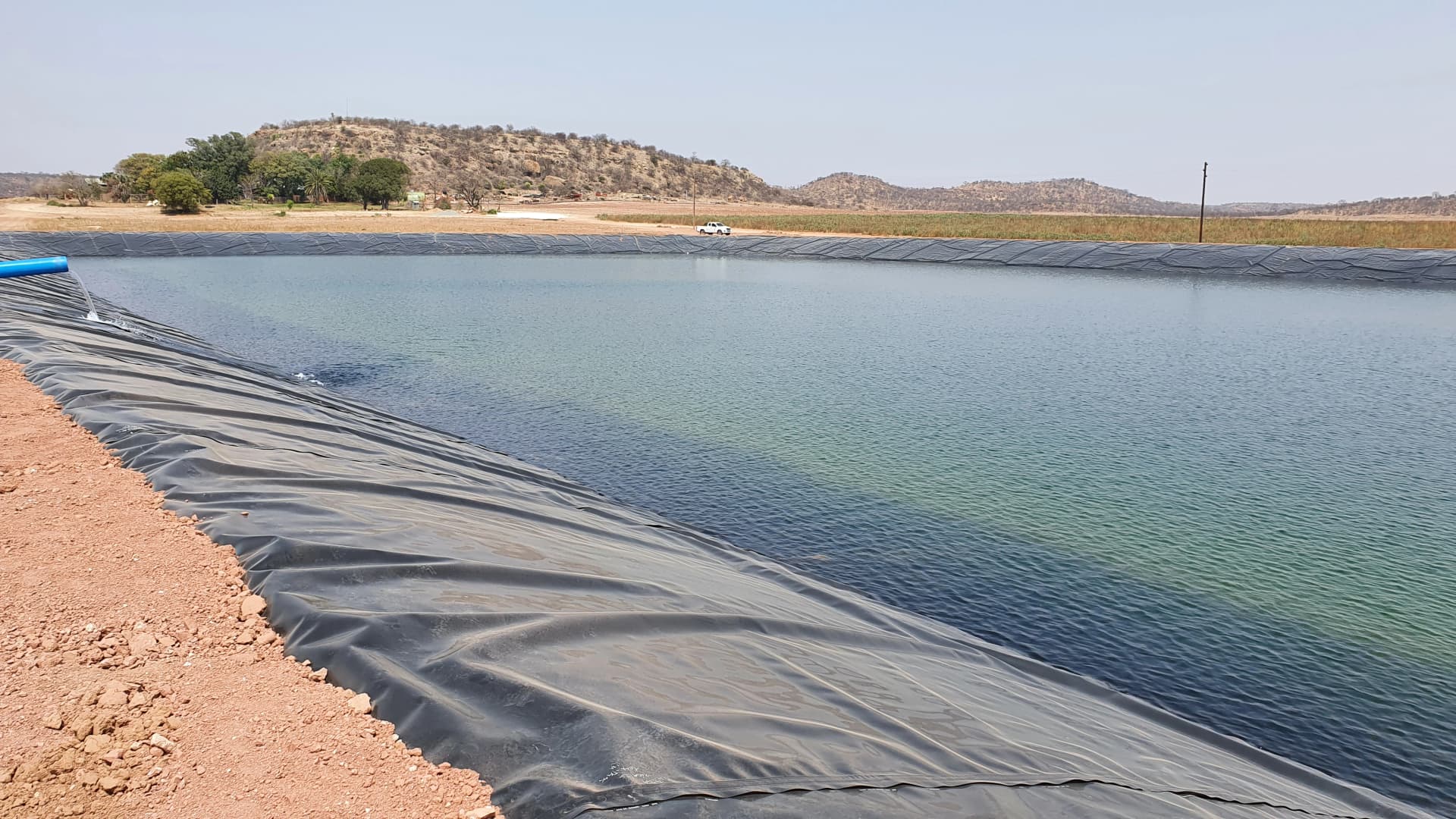
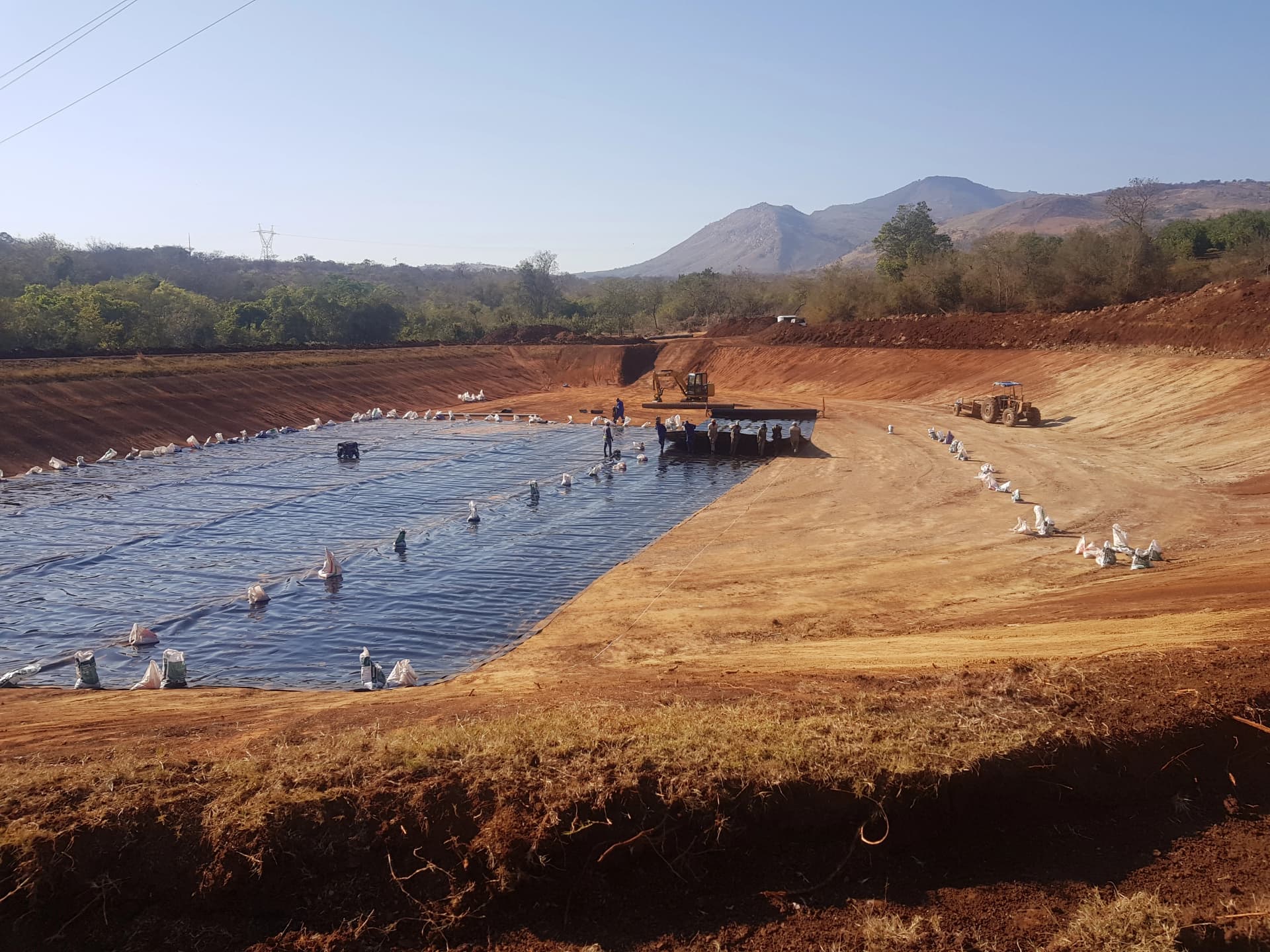
Surface area is the starting point, but steep batters, rocky subgrades, remote access and existing water in the dam all change crew days and material waste. Outlet penetrations, anchor trenches and crest protection add detail work beyond plain field sheet. Labour and freight to Limpopo differ from a Gauteng farm 40 km from Pretoria.
HDPE vs PVC vs Bitumen Cost Factors
HDPE costs more per roll but often wins on large dams because of lifespan and seepage control. PVC lowers material cost on small ponds and tank linings where rolls are manageable. Bitumen torch-on is priced on prepared concrete area and detail complexity — not comparable directly to m² HDPE on earth.
Dam Size and Surface Preparation
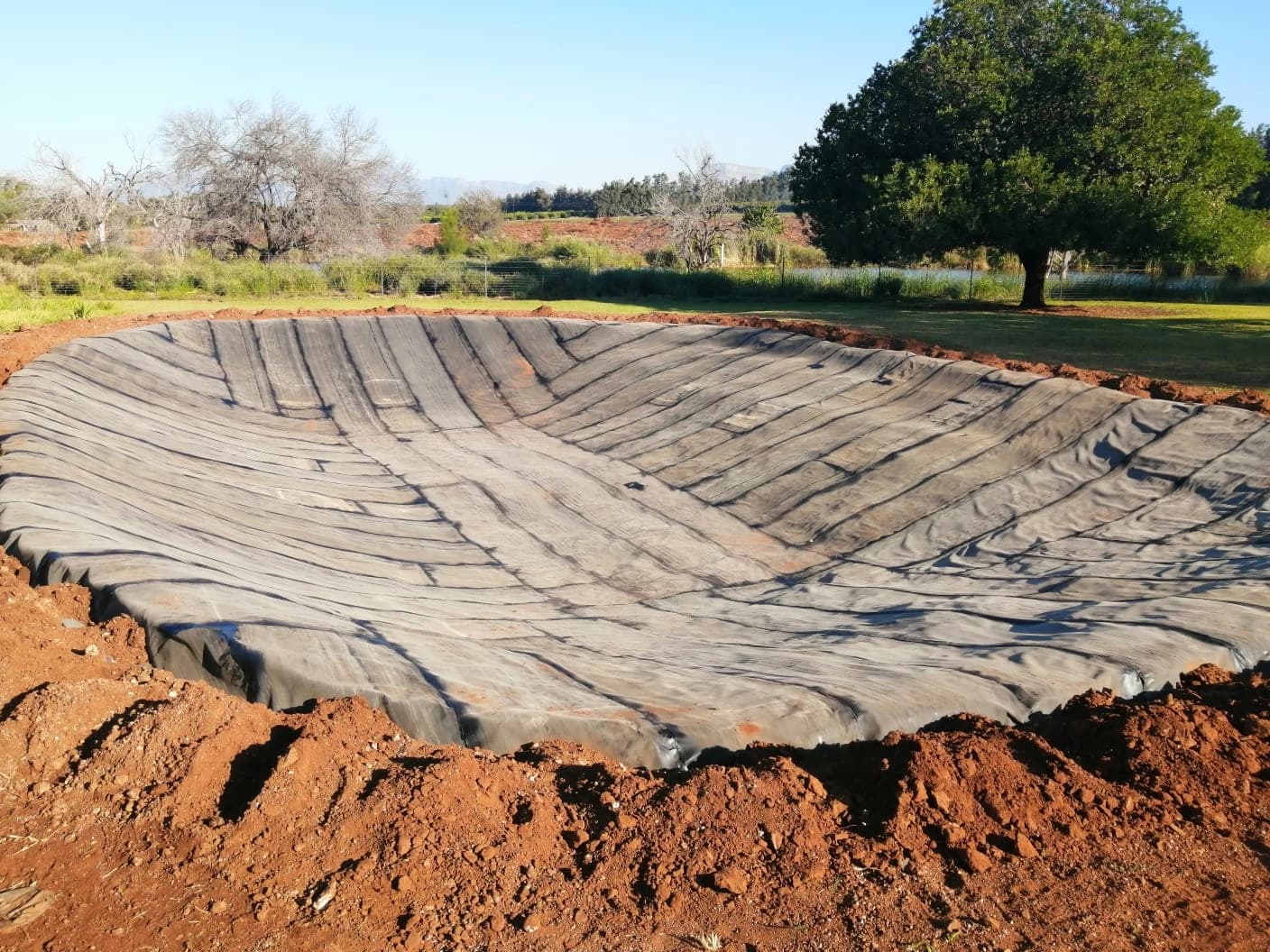
A smooth, compacted subgrade with geotextile costs less to line than a rocky batter that needs padding and hand finishing. Dewatering, silt removal and crest regrading are often the hidden scope items in cheap quotes that fail mid-project.
Access, Slopes and Anchor Trenches
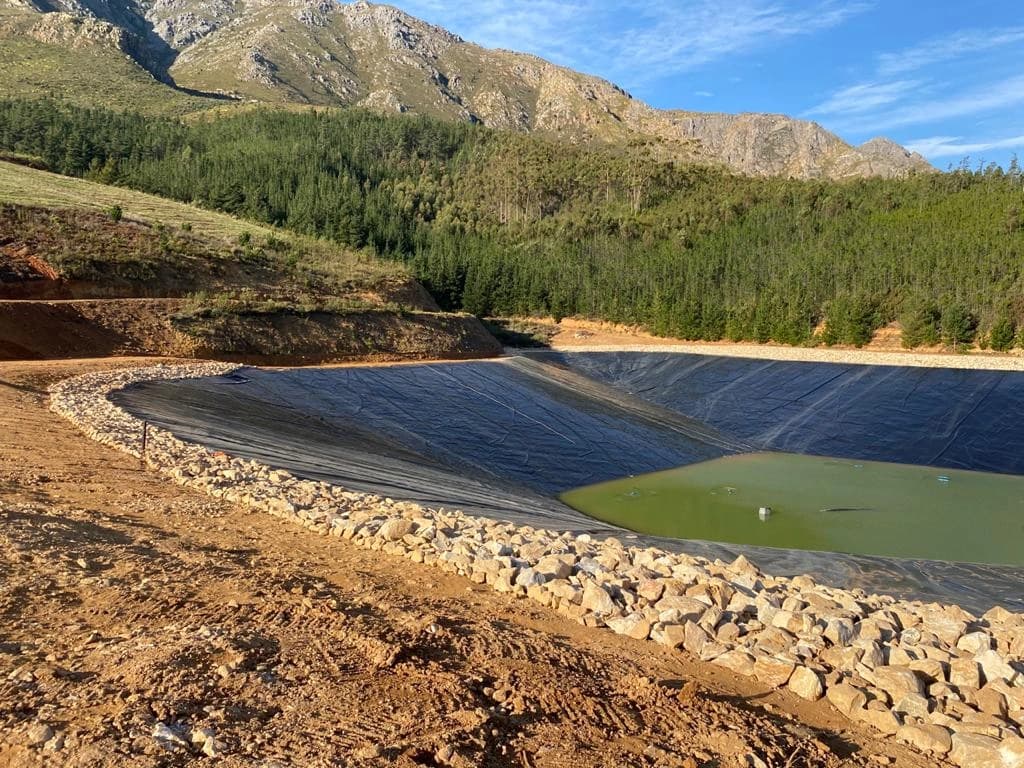
Narrow farm roads, crane reach for steel coils, and 1:1 batters slow production versus shallow farm dams with good perimeter access. Anchor trenches at the crest must be specified and included — cutting them shallow is a common reason liners pull out under full head.
Why Cheap Lining Fails
Under-specified thickness, skipped geotextile, poor welding and no outlet boots produce leaks within seasons — then relining costs more than doing it properly once. We quote for inspectable workmanship, not the lowest m² number on paper.
How to Request an Accurate Quote
Send dam length and width (or surface m²), photos of batters and crest, intended use, province and whether the dam holds water now. Use our quote form or call — we respond within one business day with next steps for site visit or detailed estimate.
Compare all liner types on our dam liners overview.