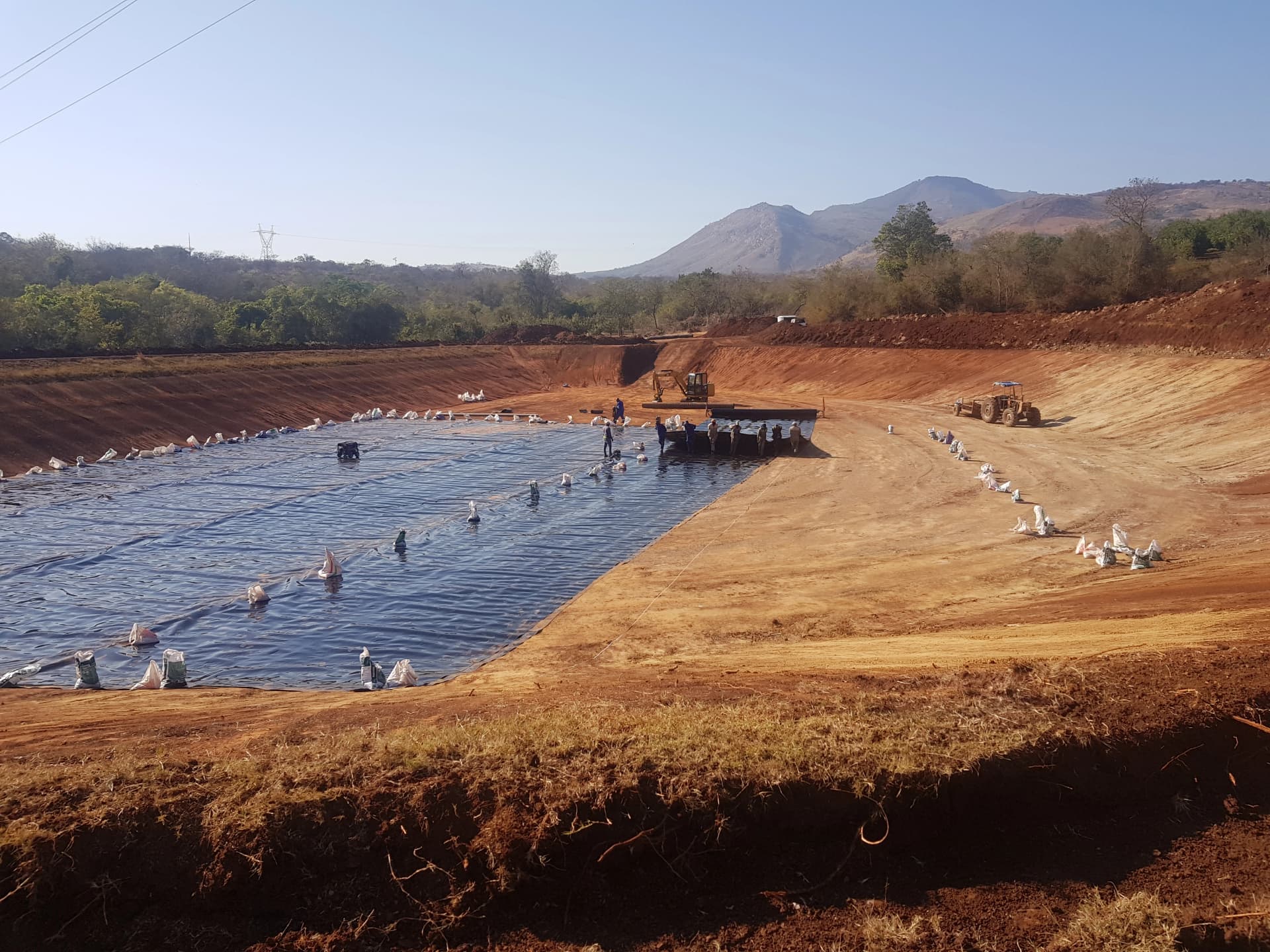
Grain, cattle and pivot farms across the Free State rely on dams built on difficult clay. Damtech lines earth dams and refurbishes cement dams so stored water stays put.
The Free State is South Africa’s central plateau — wide, open Highveld that produces a large share of the country’s maize, wheat, sunflower and potatoes, and carries big herds of beef cattle and sheep. The eastern Free State around Bethlehem, Ficksburg and Harrismith is higher, wetter and hillier, with cherries, wheat and mixed farming beneath the Maluti mountains. The west, towards Bothaville, Hoopstad and Jacobsdal, is flatter and drier, with large pivot irrigation along the Vaal, Vet and Riet rivers. The goldfields around Welkom and Virginia, and the petrochemical industry at Sasolburg, add industrial water demand. Farm dams are everywhere, and many were built decades ago on soils that were never sealed. Some of those dams have been patched repeatedly over the years and still lose water every winter.
LOCAL CONDITIONS
Climate & Seasonal Rainfall
Rain falls mainly in summer, through thunderstorms between October and March, and declines from east to west. Hail is a familiar hazard on the eastern Highveld. Winters are dry, cold and frosty — the Free State has some of the hardest frost in South Africa — and snow occasionally falls in the east. Frost affects exposed pipes, valves and fittings, and dams that sit nearly empty in winter leave their banks exposed to sun, wind and cold for months. Drought years, which can cut grain yields sharply, put pressure on every stored megalitre for livestock and irrigation, so a dam that holds water reliably is worth far more in a dry year.
SITE FACTORS
Soils & Ground Conditions
Many Free State soils are clay-rich. Swelling clays crack deeply in winter and close up when wet, while duplex soils — sandy topsoil over dense clay — are widespread on the central and eastern plateau. Some of these clays are dispersive: they break down in water and can form tunnels and gullies through earth embankments, a known cause of dam failures in the region. In the north-west, deep sandy soils drain freely and hold little water. Sandstone and dolerite outcrops in the east add rock to the mix. A liner separates the water from these soils, but the basin and anchor trenches still need careful preparation. Getting that step right is what lets the lining perform for years.
WATER USE
Irrigation & On-Farm Water Use
Centre pivots along the Vaal, Vet, Sand and Riet rivers grow maize, wheat, potatoes, lucerne and seed crops, and the Orange–Riet scheme near Jacobsdal supports lucerne, pecans and vineyards. Many farmers draw from rivers, canals or boreholes into balancing dams before pumping to pivots. Potato and seed producers in particular need dependable water during critical growth stages, and a dam that has seeped away half its volume cannot supply a full pivot cycle in a heatwave. On dryland grain farms, dams are used for livestock, crop spraying and household water rather than irrigation.
SECTORS
Agriculture, Mining & Industry
Grain, oilseeds and potatoes dominate cropping, with beef cattle, sheep and dairy alongside, and cherries and other fruit in the eastern highlands. Game farming has grown on less arable land. The Free State goldfields around Welkom, Virginia and Odendaalsrus have a long mining history, with return-water, stormwater and process-water dams still part of operations and rehabilitation. Sasolburg and other industrial areas manage process water and stormwater on site. Feedlots, dairies and piggeries hold effluent and wash water in ponds, where seepage into the ground is both a water loss and an environmental concern. Farmhouses and rural communities on the plateau also keep stored water for times when municipal or borehole supply is interrupted.
STORAGE
Water Storage Needs
Typical needs include stock-watering dams on cattle and sheep farms, balancing dams for pivots, and containment ponds at feedlots, dairies and mines. Older cement farm dams and reservoirs, common across the province, can often be refurbished with bitumen torch-on if the walls are sound. HDPE suits larger earth dams, with thickness chosen for the site; PVC can suit smaller ponds and reservoirs; and corrugated steel tanks and livestock troughs suit camps where a dam is not practical. Damtech quotes and installs across South Africa, including the Free State. Costs depend on dam size, material and preparation, as set out in our dam lining cost guide.
WHERE LINERS ARE USED
Typical Local Uses
Stock-watering dams for cattle and sheep camps
Balancing dams feeding centre pivots along the Vaal and Riet rivers
Refurbished cement farm dams and reservoirs
Feedlot, dairy and piggery effluent ponds
Return-water and stormwater dams on the goldfields
LOCAL SERVICES
Damtech Services in This Area
HDPE lining for earth dams and balancing dams
PVC lining for smaller ponds and reservoirs
Bitumen torch-on refurbishment of cement farm dams
Steel water tanks and livestock troughs
NEXT STEPS
Plan Your Dam Liner
HDPE dam lining for large earth dams, mine and effluent dams.
Damtech dam lining and water storage installations.
FAQ
Frequently Asked Questions
Can a liner stop a dam on dispersive clay from leaking?
A liner keeps water away from the clay, which removes the main cause of tunnelling and seepage through the basin. Badly eroded embankments may need repair or reshaping before lining, so send photos of any gullies or holes.
Is it worth refurbishing an old cement farm dam instead of replacing it?
Often, if the walls are structurally sound. Cracked cement dams can be resealed with bitumen torch-on after surface preparation. Dams with major structural damage may need a different solution — photos help us advise.
How does hard Free State frost affect a lined dam?
The bigger frost risks are usually exposed pipes, valves and fittings rather than the liner itself. Anchor details should also allow for winter movement in clay soils. These points are planned during installation.
Can you line a feedlot runoff pond?
Yes. HDPE is commonly used for runoff and effluent containment. Share the pond size, what drains into it and any conditions set by your environmental consultant so the specification fits the site.
MORE REGIONS
Explore Further
Regional dam lining and water storage information for other parts of South Africa.