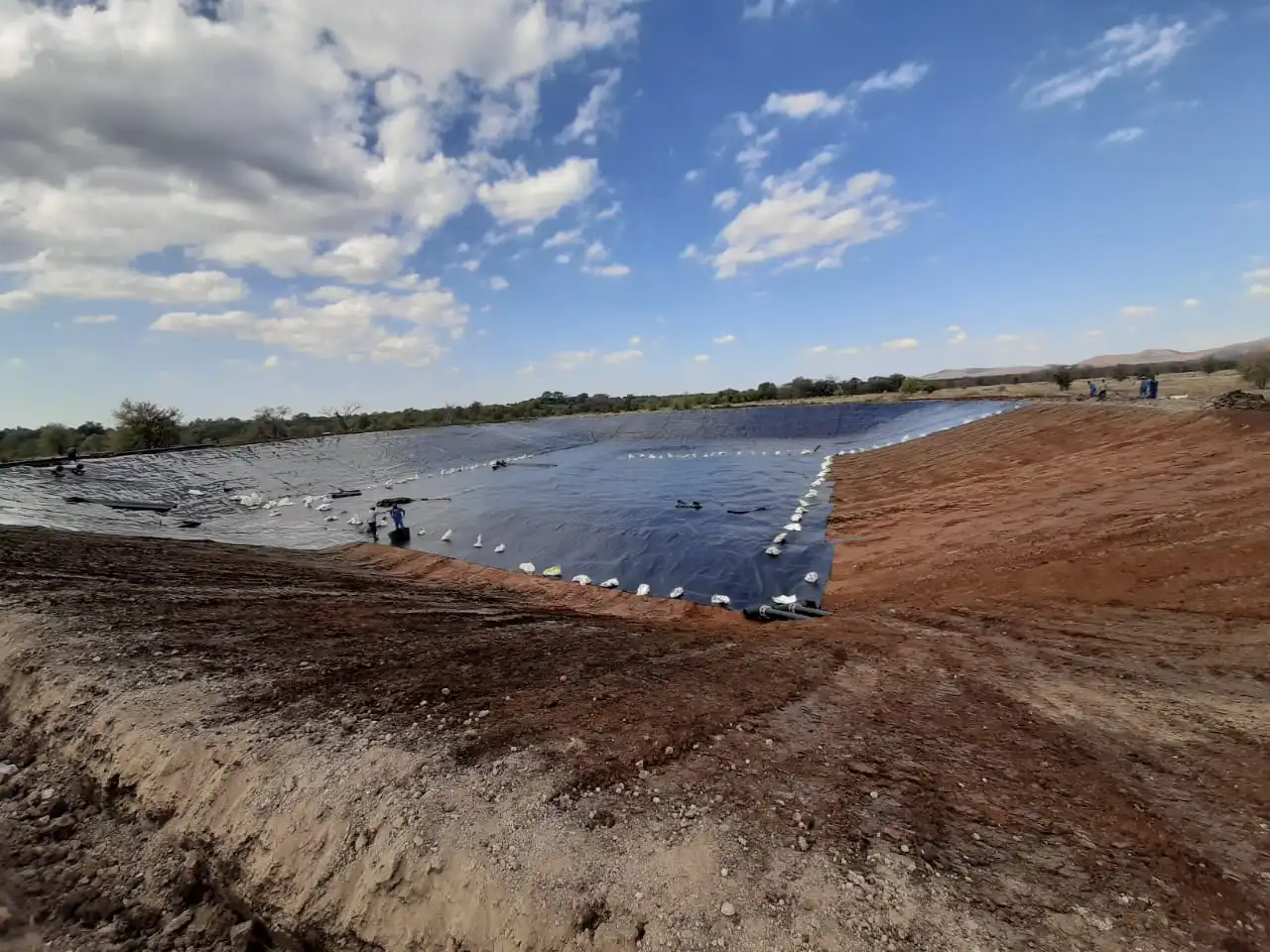
Overberg farms store winter rain for a dry, windy summer. Every cubic metre that seeps out of a dam before the irrigation season is water the farm no longer has. Damtech has lined farm dams in the region, including about 8,230 m² of HDPE in Villiersdorp and 3,400 m² in the Grabouw district, and works from a base in Betty's Bay on the Overstrand coast.
Winter rainfall fills dams between roughly May and September. Summers are dry and the south-easter raises evaporation on open water. The Elgin and Grabouw valley is wetter than the inland wheat country around Caledon and Bredasdorp, so dams there are often larger and refill reliably, while dams further inland must hold every litre they capture.
Soils range from stony, sandstone-derived slopes in the Elgin and Villiersdorp valleys to shale-derived clays on the Rûens around Caledon and Bredasdorp. Stony batters need careful preparation and geotextile protection before HDPE; shale clays can crack in dry summers and still lose water through fissures.
Apple and pear orchards in Grabouw and Elgin run drip and micro-sprinklers from farm dams through the summer, and fruit and vineyards around Villiersdorp do the same. On the Rûens, dams are used more for livestock water and household supply on grain and sheep farms, where a leaking dam means carting water in late summer.
Deciduous fruit, vineyards and berries in the valleys; wheat, canola, sheep and dairy on the Rûens; plus lifestyle farms and estates with fire and ornamental dams.
HDPE suits large earth dams that need a welded, UV-resistant liner; PVC suits smaller ponds and reservoirs; steel tanks suit sites where a dam cannot be enlarged. We recommend the system after seeing the dam, its soil and how the water is used.
HDPE farm dam lining with welded, tested seams
PVC lining for smaller ponds and reservoirs
Leaking dam assessment and liner repair
Steel water tanks where a dam is not the right answer