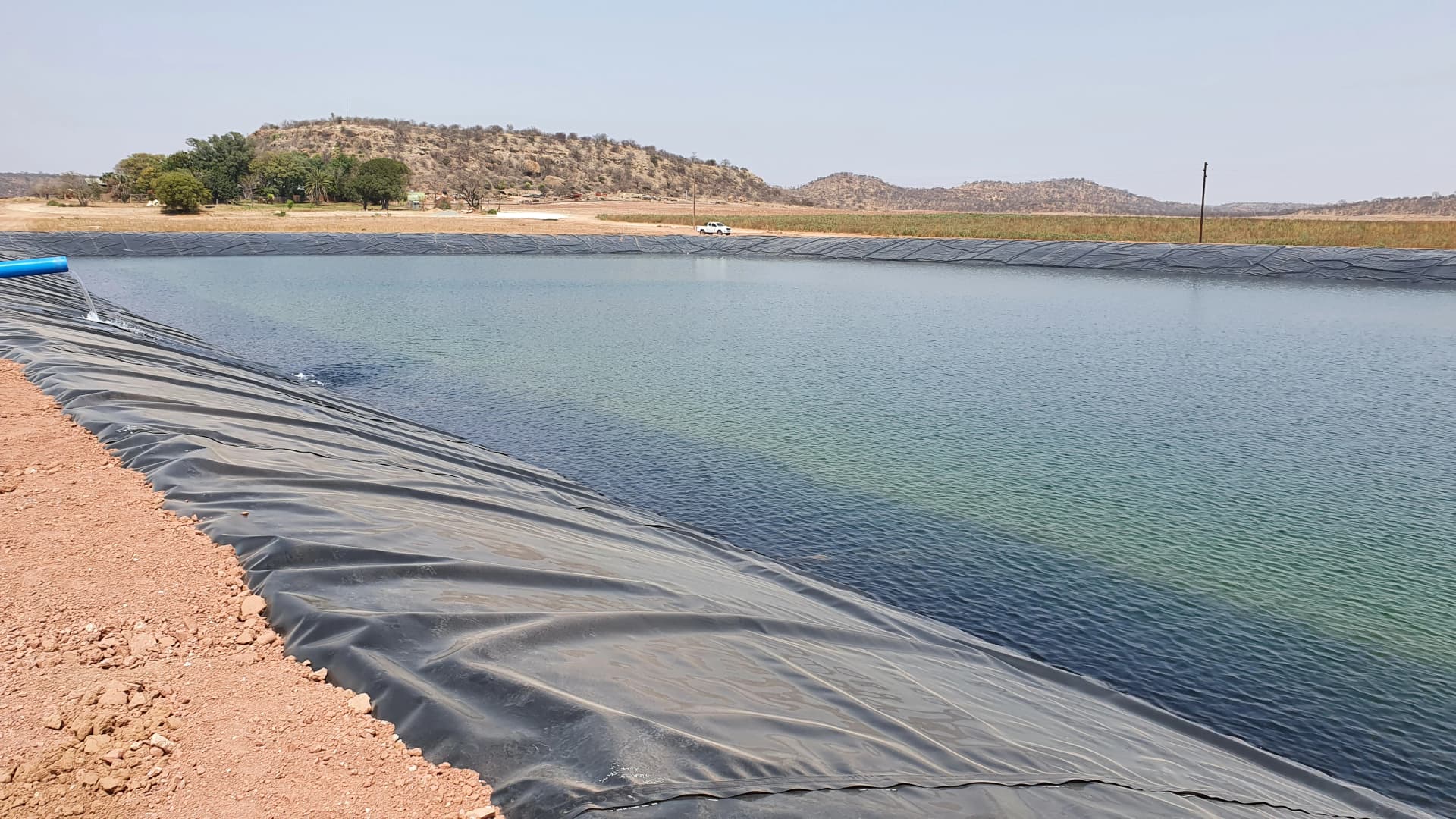
From Midlands dairy pastures to Zululand cane and game country, Damtech lines farm dams, ponds and reservoirs so summer rain lasts through the dry KwaZulu-Natal winter.
KwaZulu-Natal runs from a warm, humid Indian Ocean coastline up through the rolling Midlands to the foot of the Drakensberg, and its farms change just as quickly. Sugarcane covers much of the coastal belt and Zululand, dairy herds and plantation forestry dominate the Midlands, and cattle, game and irrigated cane spread across the drier north around Vryheid, Pongola and the Makhathini Flats. Many people assume a province this green has water to spare, yet most farm dams here are filled by summer storms and must carry a dairy, an orchard or a lodge through a dry winter. Where an earth dam loses that stored water to seepage, the shortfall usually shows up in July and August, exactly when pastures and orchards need it most.
LOCAL CONDITIONS
Climate & Seasonal Rainfall
Rain falls mainly between October and March, often as afternoon thunderstorms in the Midlands and the interior, with hail a real risk on exposed embankments and liner crests. The coast and the Midlands mist belt are among the wetter parts of South Africa, while the thornveld valleys of the Tugela basin and the far north receive far less rain and are noticeably hotter. Winters are dry and sunny; frost settles in Midlands hollows, and heavier frost and occasional snow reach the Berg foothills, which matters for exposed pipework and outlet valves. Drought years do happen — northern KwaZulu-Natal has had extended dry spells that emptied unlined stock dams — so storage planning should assume a bad year, not an average one.
SITE FACTORS
Soils & Ground Conditions
Soils vary as much as the landscape. Deep, red, well-drained soils on the Midlands plateau are excellent for crops and timber but do little to hold water in a dam basin. Shales and mudstones of the Karoo sequence underlie much of the interior and weather into clays that crack in dry winters, opening seepage paths through the floor and walls. Dolerite ridges leave hard, angular rock close to the surface, and the coastal and Zululand sands drain almost freely. On steep Midlands and Berg-foothill sites, batters often need reshaping before lining, and a geotextile underlay is typically specified wherever stones or rock fragments remain in the prepared subgrade.
WATER USE
Irrigation & On-Farm Water Use
Dairy farms in the Midlands and the Underberg and Kokstad districts irrigate ryegrass and kikuyu pastures under centre pivots and dragline sprinklers through winter, when rainfall stops but milk production must continue. Sugarcane on the coast is mostly rain-fed, but irrigated cane in the Pongola and Makhathini areas relies on canal water and balancing dams. Avocado, macadamia and vegetable growers on the south coast and in the Midlands run drip and micro-irrigation from farm dams, and forestry nurseries keep small, clean water reserves. In every case the question is the same: will the dam still hold enough water at the end of winter to finish the season?
SECTORS
Agriculture, Mining & Industry
Dairy, sugarcane, timber, beef cattle, poultry, citrus and subtropical fruit make up most of the agricultural demand for lined storage. Northern KwaZulu-Natal has a long history of coal mining around Newcastle, Dundee and Vryheid, and the Richards Bay area hosts heavy-minerals mining, smelting and port industry that all manage process water and stormwater. Private game reserves and lodges in Zululand and the Midlands need reliable drinking water for wildlife and guests. Dairy parlours and piggeries also generate effluent that is often held in ponds, where a liner helps keep contaminated water out of the ground and nearby streams.
STORAGE
Water Storage Needs
Typical needs are winter irrigation reserves for pastures, stock water for beef herds in the drier interior, fire-fighting reserves for plantations and lodges, and contained ponds for dairy or process water. HDPE suits large earth dams where a welded, UV-resistant liner is wanted; PVC can suit smaller ponds and reservoirs; and bitumen torch-on is an option for refurbishing older cement dams that still have sound walls. Corrugated steel tanks work well near homesteads and dairies where space is tight. Damtech quotes and installs across South Africa, including KwaZulu-Natal, and recommends a system after reviewing photos, dimensions and how the water is used. Costs depend on dam size, liner material and site preparation — our dam lining cost guide explains the main factors.
Damtech dam lining and water storage installations.
FAQ
Frequently Asked Questions
Does a high-rainfall area like the KwaZulu-Natal Midlands still need lined dams?
Often, yes. Rain falls mostly in summer, while pasture irrigation peaks in the dry winter. If a dam seeps, much of the summer inflow is gone before it is needed. Lining keeps that water in the dam through the dry months.
Can you line a dairy effluent pond?
Yes. HDPE is commonly used to contain dairy and piggery effluent. Share the pond size, what flows into it and any requirements from your environmental consultant so the liner and anchoring can be specified correctly.
How do steep Midlands slopes affect dam lining?
Steep batters must be shaped to a stable angle before the liner goes in, and anchor trenches at the crest hold the sheet in place. Send photos and rough dimensions so we can assess whether reshaping is needed.
Does Damtech take on dam lining projects in KwaZulu-Natal?
Yes. Damtech quotes and installs across South Africa, including KwaZulu-Natal. Send the dam location, approximate size and a few photos, and we will advise on material and the next steps for a site quote.
MORE REGIONS
Explore Further
Regional dam lining and water storage information for other parts of South Africa.