Damtech guide
How to Drought-Proof Your Farm Dam Before the El Niño Summer Peaks
A very strong El Niño is forecast to bring a hotter, drier summer to much of South Africa. If your farm relies on an earth dam, now is the time to check it. The water you capture in good years is only useful if it is still there when the dry spell arrives. This guide covers how to drought-proof a farm dam before the El Niño summer peaks.
For the wider forecast picture, read our overview of El Niño and water security on South African farms.
Why your dam needs attention this summer
National dam levels are high, at about 95.6% in early November 2026 according to the Department of Water and Sanitation. That protects big irrigation schemes and municipal supply, but it does not top up your private dam. A hotter summer raises both evaporation and water demand, so a farm dam draws down faster than usual. SAWS advises a conservative management approach in El Niño summers, and for a dam owner that starts with knowing how much water you are losing.
The two silent losses: seepage and evaporation
Seepage
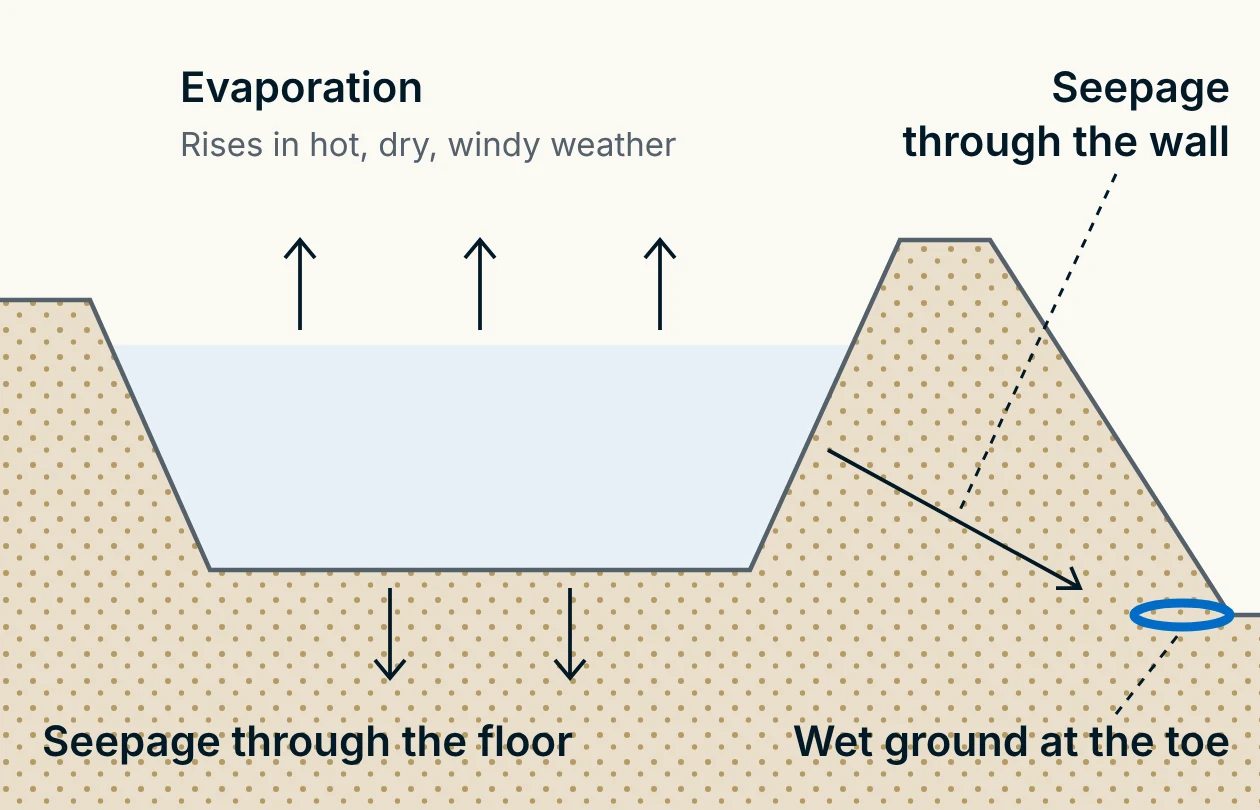
Seepage is water that escapes through the floor and walls of the dam. Sandy soils lose water quickly, while clay can crack as it dries. A dam that holds less than it should is also one that gives you less reserve when it matters. Our guide to dam lining for sandy and clay soils explains how soil type affects losses.
Evaporation
Evaporation is the loss from the water surface, and it rises in hot, dry, windy weather. You cannot stop it entirely, but you can limit the damage by fixing seepage and pipe leaks first, so that evaporation is the only major loss left, and by keeping water in fewer, deeper storage points rather than several shallow ones. Our water-saving tips for farm dams cover more of these options.
Step 1: Check whether your dam is leaking
Start with a simple test: compare how fast the water level falls with how fast it should fall from evaporation alone. If the level drops faster, you probably have a leak. Walk the crest and toe of the embankment looking for wet patches, soft ground, erosion or green growth that stays lush in dry weather. For a full checklist, see our farm dam leak diagnosis and repair guide.
Also check the pipes, valves and outlets. They are often the real source when a dam seems to lose water overnight.
Step 2: Repair what is failing before it widens
Small leaks and torn liner sections tend to grow under UV exposure, stock traffic and wind. Repairing early is cheaper than relining later. If you already have a liner, look for:
- Tears or punctures near the waterline, where sun and wind do the most damage
- Seams that have lifted or failed
- Liner pulling away from the crest or anchor trench
- Damage around inlet and outlet pipes
Our leaking dam repair service covers failed geomembrane liners and water storage systems. You can also read how to prevent costly farm dam liner failures.
Step 3: Line the dam if it loses too much water
If an unlined dam will not hold water, or an old liner is beyond patching, lining is the long-term fix. The common options are:
- HDPE dam lining, a tough geomembrane suited to large earth dams and reservoirs
- PVC dam lining, a flexible option for ponds and smaller farm dams
- Torch-on lining, bitumen membranes for cement dams and canals
Our farm dam linings page explains which option suits livestock water and irrigation storage, and our dam lining cost guide covers what drives the price. If you are in Limpopo or Mpumalanga, two of the more exposed regions, see our local pages for Limpopo dam liners and Mpumalanga dam liners.
Step 4: Protect water quality as levels fall
As a dam drops, the remaining water warms, concentrates and tends to grow algae. That matters most when animals drink from it. Keep stock out of the dam where you can, and use troughs fed from the dam instead. Our guide to farm dam water quality for livestock explains what to look for.
Step 5: Add backup storage you control
Do not rely on one dam. In 2015/16, 29 of the 89 emergency boreholes drilled came up dry, so groundwater is not a guaranteed backup. A tank or reservoir next to your dam or borehole gives you a buffer for pumping outages and dry spells. See our corrugated steel water storage tanks, and read how to integrate borehole water with farm dams.
To work out how much you need, use our dam lining and water storage calculators.
El Niño dam checklist
- Compare your dam's level drop against expected evaporation.
- Walk the embankment and look for wet patches and erosion.
- Inspect any liner for tears, lifted seams and damaged pipe connections.
- Repair or reline before the hottest months.
- Check pumps, valves, pipelines and troughs.
- Add tank storage next to your dam or borehole.
- Keep stock numbers in line with your water supply.
Frequently asked questions
How do I know if my farm dam is leaking?
If the water level falls faster than evaporation can explain, or you see wet ground at the toe of the embankment, you likely have a leak. A site inspection can confirm where it is coming from.
Can a lined dam still lose water?
Yes. Tears, failed seams and damaged pipe connections can all let water out of a lined dam, which is why regular inspection matters.
Is it worth lining a dam before a drought?
If your dam loses significant water to seepage, lining it before the dry season means more of the water you capture stays available. A quote based on your dam's dimensions will show the cost against the benefit.
Ready to protect your dam before summer peaks? Request a free dam lining or repair quote, or contact Damtech to book a site inspection.